


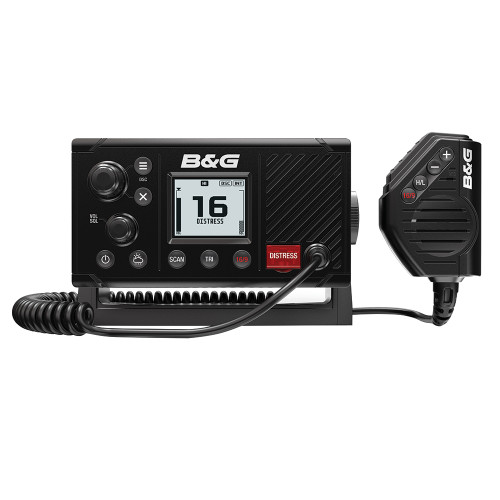
B&G V20S Fixed-Mount VHF Radio, Built-In GPS, Class D DSC, NMEA 2000, IPX7



-
Perfect Fit, Guaranteed
Get the right part every time
-
Expert Support
Our in-house specialists know our products inside and out
-
Enhanced Value & Service
We go beyond the sale with professional and balanced services
-
Wordwide Delivery
Enjoy hassle-free worldwide delivery
B&G V20S Fixed-Mount VHF Radio, Built-In GPS, Class D DSC, NMEA 2000, IPX7

B&G V20S Fixed-Mount VHF Radio, Built-In GPS, Class D DSC, NMEA 2000, IPX7
Overview
The B&G 000-14492-001 is a V20S fixed-mount VHF radio with an integrated GPS receiver and Class D DSC for digital distress calling. It runs on a 12 V DC battery system and lets you select 25 W or 1 W transmit power, with an IPx7 housing that can handle cockpit spray and washdowns.
GPS position can come from the built-in receiver and antenna, an optional external GPS antenna on the SMA port, or from a chartplotter over NMEA 2000 or NMEA 0183. A dedicated Channel 70 DSC receiver maintains the DSC watch while you work on a voice channel, and the radio supports International, USA, and Canada channel banks plus country-specific weather channels where available.
The chassis measures 166.7 mm wide x 89.2 mm high x 161.4 mm deep (without the bracket) and weighs 1.18 kg. It is a sensible match for sailboats and powerboats that want a single fixed VHF with built-in GPS for DSC, especially on boats already wired for NMEA 2000 or NMEA 0183 between the helm and nav station.
Key features
- Class D DSC with a dedicated distress button and a separate Channel 70 DSC receiver
- Integrated GPS receiver with internal antenna; supports optional external GPS antenna via SMA and GPS input via NMEA 2000 or NMEA 0183
- Selectable transmit power: 25 W (high) or 1 W (low)
- IPx7 waterproof rating for exposed mounting locations
- NMEA 2000 and NMEA 0183 ports for sharing position and DSC call data with compatible electronics
- Channel banks for International, USA, and Canada, plus weather channels where available (country specific)
- High-contrast LCD with inverted night mode and rotary channel control for quick operation under way
- External speaker support with 4 W output for a 4 ohm, 4 W (minimum) speaker
- Scanning and watch functions including tri-watch, favorites scanning, and a contacts list (up to 50 entries)
- Bracket or flush-mount installation using included hardware and mounting template
What's included
- VHF radio with hand microphone
- Gimbal mounting bracket
- Gasket for recessed (flush) mounting
- Sun cover
- User manual
- Warranty card
- Mounting template
- Bracket knobs
- Bezel trim
- 8 A (3 AG) spare fuse
- Bulkhead mount for the hand microphone
- 6 stainless steel panhead Phillips screws (3.5 x 20 mm)
- 4 stainless steel panhead Phillips screws (4 x 25 mm)
Installation and setup
You can mount the radio on the supplied gimbal bracket (on top of, or under, a flat surface) or flush-mount it so only the face is visible. The included template helps confirm the cutout and screw locations before you drill, and the gasket seals the face for recessed installs.
Plan the mounting location so you can reach the rear for power, antenna, and network wiring, and allow a clear view of the display within about +/-20 degrees of center. Keep the unit about 0.5 m (1.5 ft) from a compass, and allow a sensible path for the microphone curly cord to reach its bulkhead clip.
If you intend to use the built-in GPS antenna, mount the radio where it has a clear path to the sky with minimal metal between the face of the unit and open air. On metal boats or installs below decks, an external GPS antenna connection can be the more predictable way to maintain a steady fix.
Electrical and system integration
Power is for a 12 V DC battery system (nominal 13.6 V). Current draw is rated up to 6 A at 25 W transmit and about 1.5 A at 1 W transmit, with standby draw listed under 450 mA. Protection is via an 8 A glass 3 AG fuse, and the harness is supplied with an inline fuse.
For the antenna connection, the radio uses a SO-239 VHF connector and expects a marine VHF antenna feed using 50 ohm coax with a PL-259 connector. Do not transmit without an antenna connected, and route coax and power cabling to avoid sharp bends and chafe points in high-vibration areas.
NMEA 2000 and NMEA 0183 connections let the radio share GPS position and DSC-related information with compatible displays and plotters. If you are wiring NMEA 0183 directly, plan for the RX and TX pairs at the radio and confirm your chartplotter’s port type and baud requirements before final terminations.
Compatibility and fit
The operating temperature range is -20 C to +55 C (-4 F to 131 F), which suits exposed helm and cabin installs when basic ventilation is maintained. GPS input can be selected between internal GPS, NMEA 2000, or NMEA 0183, which helps when you want DSC position to follow the same source as your navigation system.
This radio is a practical choice for coastal cruising, offshore passages, and race day communication where you want DSC safety features without adding a separate GPS just to supply position. It also fits well on boats that already have B&G instruments and networks, where matching backlighting behavior and a low-profile face matter at the helm.
Maintenance and care
After saltwater exposure, a light freshwater rinse and a wipe-down helps keep keys and the microphone speaker clear. Periodically check the microphone cord and the rear connectors for strain, and confirm the antenna coax connection stays tight and dry, especially after hard running or seasonal layup.
We ship all in-store (FL) stock orders the same day if placed before 3 PM EST, Monday through Friday. Orders placed after this time will ship the next business day. Orders fulfilled from other warehouses or manufacturers may not ship the same day. If an item is out of stock, we will notify you promptly.
Related Products

Garmin VHF 215 Fixed-Mount VHF Marine Radio, 25W, Class D DSC, Built-In GPS, NMEA 2000, IPX7


Simrad RS40 Fixed-Mount VHF Radio, Class D DSC, AIS Receiver, Built-In GPS, NMEA 2000, IPX7
Out of stock

B&G Fixed-Mount VHF Marine Radio, Class D DSC, AIS, NMEA 2000, GPS


Simrad RS20S Fixed Mount VHF Radio, Class D DSC, Integrated GPS, NMEA 2000, NMEA 0183, IPX7

Garmin VHF 115 Fixed-Mount Marine VHF Radio, 25W, Built-In GPS, Class D DSC, NMEA 2000