
How to Choose a Boat Fish Finder for Your Next Upgrade
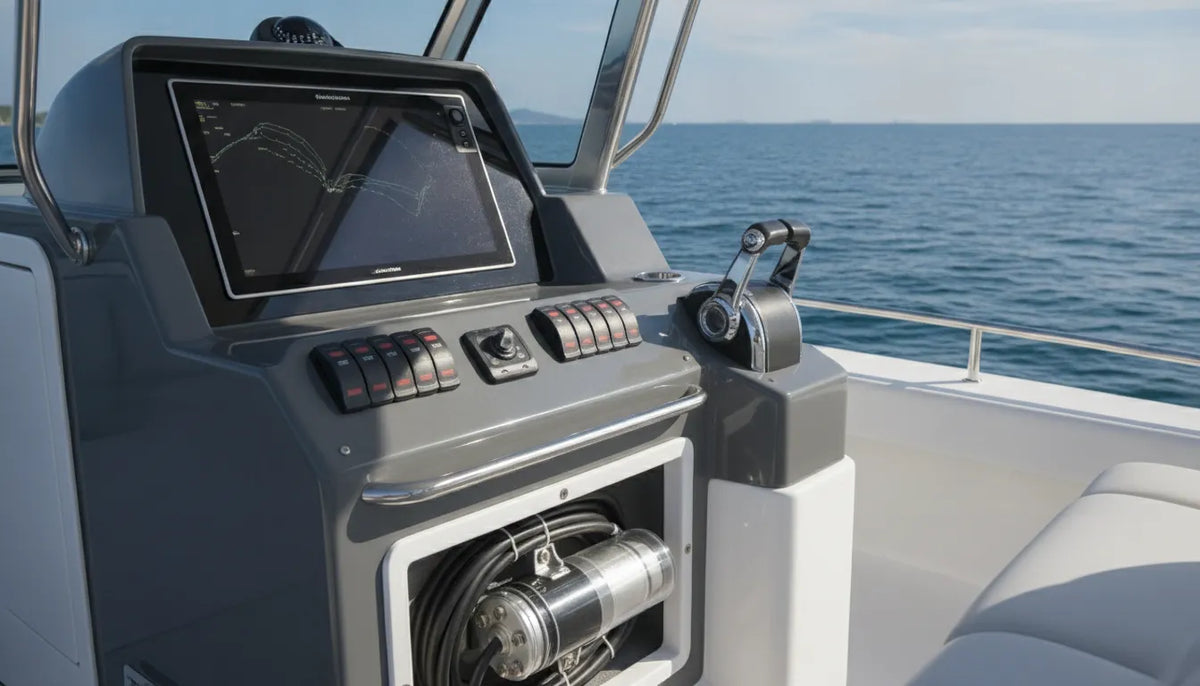
A boat fish finder is more than a screen that puts fish-shaped marks on a display. It is a sonar system, a transducer installation, a power connection, and often a chartplotter or networked marine-electronics component working together. The right choice depends on your boat, hull, fishing style, water depth, helm space, and plans for future upgrades.
Call (954) 375-0100 for help choosing a boat fish finder
Before comparing brands or screen sizes, define what you want the system to do. A small trailerable boat may need a compact unit with a simple transom-mounted transducer. A larger vessel or refit may need a multifunction display, a through-hull installation plan, networking, and room to expand. This guide explains the decisions in order so you can build a clear equipment list and ask better questions before you buy.
How To Choose A Boat Fish Finder
Start with the job the electronics must perform. A boat fish finder can help you read depth, identify bottom changes, locate fish-holding structure, and mark useful waypoints. Some units focus on sonar and depth information. Others combine fish-finding functions with GPS, charts, radar support, engine data, or other networked equipment.
Write down the answers to five questions before shopping: Where do you fish? How fast does the boat normally travel while you need a bottom reading? What information must be visible at the helm? Where can a transducer be installed? What other electronics should share data with the new display? These answers are more useful than starting with a favorite brand or the largest screen that fits your budget.
Choose The Display Format Before The Feature List
The display is the part you will use every trip, so fit and visibility matter. Measure the available mounting area at the helm, including the space needed for brackets, cables, connectors, and access to controls. A display that looks attractive in a product listing can still be a poor choice if it blocks sight lines, covers a switch, or leaves no room to service the wiring.
Dedicated Fish Finder
A dedicated fish finder keeps the focus on sonar and depth information. This format can suit an angler who already has separate navigation equipment or wants a straightforward addition to a smaller helm. It may also be practical when the existing chartplotter should remain untouched during a limited upgrade.
GPS Fish Finder Combo
A GPS fish finder combines sonar information with position, tracks, and waypoints in one display. This can reduce the number of screens at the helm and make it easier to mark a productive location. Confirm exactly which charts, mapping functions, mounting hardware, and transducer are included in the package you are considering.
Multifunction Display
A multifunction display, often called an MFD, can combine chartplotting with sonar and may provide a path to radar, autopilot, engine, or network integration. It makes the most sense when the boat is receiving a broader electronics upgrade. It also requires more planning because the display, transducer, network, power, and accessories must work together.
Do not assume that a larger or more advanced screen automatically improves the fishing experience. A smaller display with a well-planned transducer and clear installation may be more useful than a large unit that is difficult to read, poorly placed, or missing the sonar component you need.
| Format. | Good Starting Point When. | Confirm Before Buying. |
|---|---|---|
| Dedicated fish finder. | You mainly need sonar and depth information. | Transducer type, display fit, and power requirements. |
| GPS fish finder combo. | You want sonar, position, tracks, and waypoints together. | Charts, included transducer, mapping features, and mount. |
| Multifunction display. | You are planning a broader electronics or network upgrade. | Network standards, modules, accessories, and installation space. |
Match Sonar Features To The Water And The Way You Fish
Sonar features are not interchangeable labels. Traditional sonar, CHIRP, down imaging, side imaging, and live sonar each present information differently. The useful question is not which feature sounds most advanced. Ask which view helps you make decisions in the water you actually fish and whether the matching transducer is included or must be purchased separately.
- Traditional sonar: A practical starting point for reading depth, bottom contour, and returns below the boat.
- CHIRP sonar: Uses a range of frequencies during a sweep rather than relying on one fixed frequency. Confirm the unit and transducer combination rather than assuming every CHIRP label performs the same way.
- Down imaging: Creates a more detailed view beneath the boat and can help interpret structure directly below the transducer.
- Side imaging: Looks to the sides as well as below, which can help scan more area when the boat is moving at an appropriate speed and the transducer has a clear view.
- Live or forward-looking sonar: Shows changing returns in a more immediate way, but it may require specialized hardware, a particular installation, and a different operating routine.
Use manufacturer documentation to confirm what a named feature requires. A display may support a sonar mode without including the transducer needed to use it. The screen, sounder module, transducer, software, and wiring should be treated as one system during the buying process.
Give The Transducer Equal Weight With The Screen
The transducer sends and receives the sonar signal, so it deserves at least as much attention as the display. Raymarine's transducer selection guide identifies mounting position, housing material, display needs, power, frequency, and cone angle as important selection factors. Use the guide as background, then confirm the final choice against your boat and the equipment manufacturer's instructions.
Transom Mount
A transom-mounted transducer is often considered for smaller boats and boats that are trailered. It can be accessible for inspection and replacement, but the location must remain clear of turbulence from the hull, propeller, steps, trim tabs, and other hardware. The mounting surface also needs to place the transducer at the correct depth and angle when the boat is underway.
Through-Hull Mount
A through-hull installation places the transducer through the hull. It can be part of a high-performance or larger-vessel installation plan, but it introduces hull-material, deadrise, access, sealing, and service considerations. Never select a through-hull part from a product name alone. Confirm the hull material, transducer housing, angle, fairing or offset requirements, and installation method with a qualified marine professional.
In-Hull Mount
An in-hull transducer can transmit through some hulls without an external transducer body in the water. Its suitability depends on the construction of the hull and the manufacturer's approved installation method. A hull with materials, cores, voids, or coatings that interfere with the signal may not be a candidate. Ask for a clear compatibility check before relying on this approach.
Trolling-Motor Or Portable Mount
Portable and trolling-motor mounting can serve small boats, temporary setups, and anglers who need flexibility. The tradeoff is that the transducer position can change, and the cable must be protected from movement, steering, and abrasion. Make sure the product package states what mount and cable arrangement are included.
Check Hull Material, Speed, And Water Depth
Your hull and operating profile narrow the compatible choices. Record the hull material, approximate deadrise if known, propulsion type, normal cruising speed, maximum speed at which you expect to read sonar, and the shallowest and deepest water you commonly fish. Also note whether the boat is trailered, stored in a lift, or kept in the water.
Frequency and power affect how the system performs in different conditions, but a number on a product page is not a complete recommendation. Higher power, lower or higher frequencies, beam angles, and imaging modes all interact with the transducer and the water. A unit that is suitable for shallow inshore trips may not be the best answer for deep offshore work, and the correct choice can vary by hull and installation.
Pay close attention to metal and wood hull considerations. Housing material, isolation requirements, bonding, and corrosion risk are installation issues, not details to guess from a photo. If you are unsure about any of them, pause the purchase and ask Apollo Lighting or a qualified installer to review the boat information first.
Plan The Installation Before Ordering
Installation planning prevents many expensive surprises. Sketch the helm and transducer locations, then trace the route for power, transducer, network, and accessory cables. Look for bulkheads, fuel tanks, steering components, moving linkages, heat sources, and areas where water could reach connectors. Leave enough slack for service without creating loops that can snag or chafe.
- Measure the helm: Record the cutout or bracket area, viewing angle, depth behind the panel, and clearance for connectors.
- Inspect the power system: Identify the battery or distribution point, fuse requirements, wire path, switch arrangement, and available capacity.
- Choose the transducer location: Check for clean water flow, structural access, hull angle, service access, and protection from impact.
- List existing equipment: Record model names, network standards, connectors, software versions, and any devices that should share waypoints or data.
- Confirm the complete package: Verify the display, transducer, mount, power cable, fuse or breaker needs, network accessories, charts, and installation parts.
Manufacturer installation manuals should control the final placement and wiring. A retailer's product title can help you find the right category, but it should not replace the manual or a compatibility review. If the job requires drilling the hull, routing new network cable, or changing a sealed electrical system, use the appropriate marine technician.
Use Apollo Product Listings As A Starting Point
Apollo Lighting's online fish finder selection includes several formats that illustrate why package details matter. The Garmin STRIKER 4 Portable Fishfinder GPS Combo represents a compact portable-style option. The Humminbird HELIX 5 DI G2 Fish Finder represents a display and sonar product whose exact package contents should be reviewed.
A different product page, the Garmin STRIKER Vivid 5cv Fishfinder listed without a transducer, is a useful reminder not to assume that every fish finder includes the same hardware. Apollo also lists products across chartplotter and fishfinder categories, so compare the exact model, included accessories, mounting method, and intended installation rather than comparing only screen size or brand name.
Product listings, pricing, and stock can change. Before ordering, open the specific product page and confirm the current description and included components. If you are replacing an older unit, keep the old model number, transducer label, connector photos, and measurements available. Those details let the Apollo team help you identify a sensible replacement or a broader upgrade without guessing at compatibility.
Questions To Ask Before Buying
Bring these questions to the retailer or installer. Clear answers are more valuable than a long feature list.
- Which display size fits the helm without blocking controls or visibility?
- Is this a dedicated fish finder, GPS combo, or multifunction display?
- Which sonar views does the exact package support?
- Is the transducer included, and which mounting style is it?
- Will the transducer suit my hull material, deadrise, propulsion, and normal speed?
- What power, fuse, breaker, and cable-routing requirements should I plan for?
- Can it share data with my existing chartplotter, radar, autopilot, engine, or network?
- Are charts, maps, software features, or network accessories separate purchases?
- What information should I photograph or measure before placing the order?
- Who should complete the installation if the work involves hull penetration or new networking?
A Simple Upgrade Decision Framework
If you want the simplest path, match the system to the scope of the project. For a small boat with limited helm space, start with a compact display and an installation method that fits the hull and trailering routine. For a boat that needs navigation and sonar together, compare GPS fish finder combos and confirm the chart and transducer package. For a major refit, map the entire electronics network before selecting the MFD.
When two products appear similar, compare the complete system rather than the headline feature. Review the transducer, mount, cable length, power requirements, screen visibility, data connections, software support, and service access. A fish finder that fits the boat and can be installed correctly is a better upgrade than one with a longer list of features but an uncertain installation.
Call (954) 375-0100 to review your boat fish finder and transducer plan with Apollo Lighting
Frequently Asked Questions
What is the best boat fish finder for a small boat?
The best choice depends on the helm space, hull, fishing water, and installation method. A compact unit may be easier to mount, but confirm whether it includes the transducer and mounting hardware you need. Portable, transom, and trolling-motor options each solve different installation problems.
Does every fish finder include a transducer?
No. Some packages include a transducer, while others list the display or sounder without one. Read the exact product description and confirm the transducer model, connector, mount, and cable before ordering. Do not assume that a display's supported sonar modes identify the hardware included in the box.
Should I choose a GPS fish finder or a multifunction display?
Choose a GPS fish finder when you want combined position and sonar functions in a focused package. Consider an MFD when the upgrade also includes chartplotting, radar, autopilot, engine data, or a larger network. The right answer depends on the rest of the boat's electronics and your installation plan.
Can I reuse my existing transducer?
Sometimes, but never assume it. Reuse depends on the transducer's model, connector, frequency, mounting position, hull, cable condition, and compatibility with the new display. Photograph the label and connector, then ask the manufacturer or a marine-electronics specialist to confirm before building the upgrade around it.
Do I need professional installation?
Professional installation is worth considering when the work involves hull penetration, a through-hull transducer, new network wiring, a complex helm cutout, or changes to the boat's electrical distribution. Even for a simpler installation, follow the manufacturer's instructions and protect cables and connections from water, heat, movement, and chafe.
Choosing a boat fish finder is easier when you treat the display, transducer, hull, power system, and network as one project. Gather the boat's measurements and existing model numbers, compare complete packages, and ask for a compatibility review before ordering.
Call (954) 375-0100 to talk through your marine electronics upgrade with Apollo Lighting.