
Outboard Jack Plate: What It Does and How to Choose One
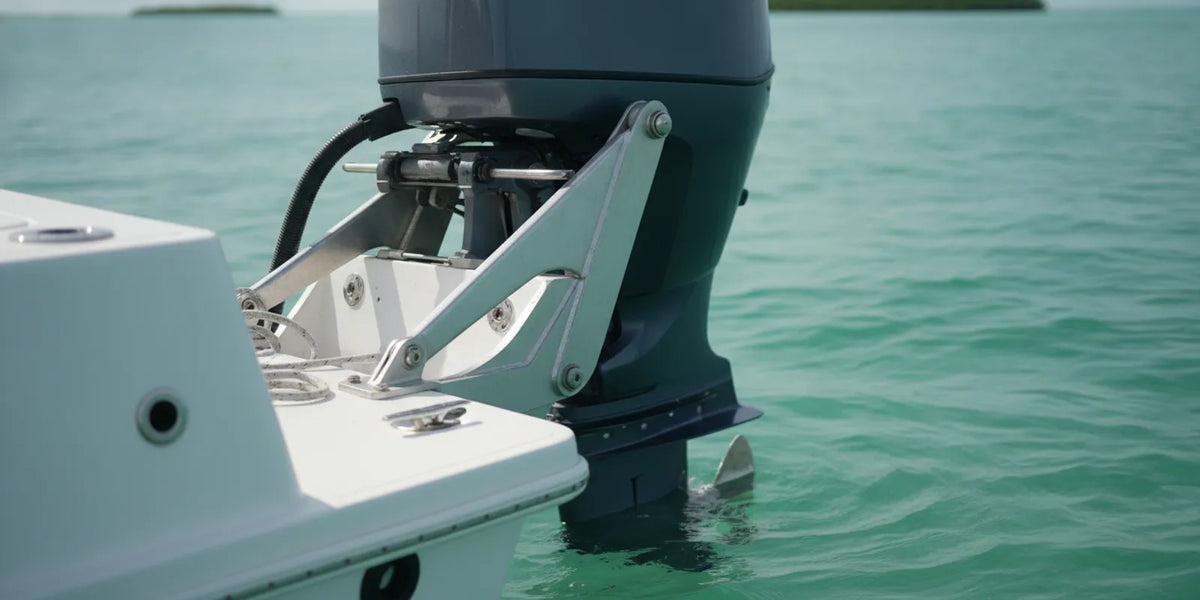
An outboard jack plate is a bracket mounted between a boat’s transom and its outboard motor. Depending on the model, it can move the motor aft, change its mounting height, or do both. Choosing one is not a matter of matching horsepower alone: the boat, transom, engine, rigging, intended use, and the plate’s specifications all need to be considered together.
Call Apollo Lighting with a product question
By Maria Villanueva, Sales
What does an outboard jack plate do?
A jack plate provides a mounting interface between the transom and outboard. A fixed or manual model holds the motor in a selected position. A hydraulic model is designed to move the motor up or down using a powered adjustment system. Many designs also add setback, meaning the engine sits farther behind the transom than it would on a direct mount. The amount and adjustment range depend on the specific product.
Boat owners consider a plate for different setup needs, such as changing engine height or creating clearance behind the transom. Those possible uses do not guarantee a change in speed, handling, fuel use, or shallow-water operation. Outcomes depend on the particular hull, engine, load, propeller, rigging, and adjustment. Treat broad product descriptions as a starting point, not proof that a plate will solve a particular boat problem.
A jack plate also does not repair a damaged transom or correct an unsuitable engine installation. If you are unsure why the motor needs to move, first review the boat and outboard documentation and describe the issue to a qualified marine professional.
Should you choose a manual or hydraulic model?
The useful question is whether you need to adjust engine height during operation, or whether a properly selected fixed setting meets the project’s needs. The answer should come from the boat’s setup and the product instructions, not from assuming that more adjustment is always better.
- Manual plate: Consider this type when a fixed position is appropriate and you do not need powered in-use adjustment. Confirm how the plate is adjusted, what tools or access are needed, and whether the selected model’s dimensions and limits suit the boat and engine.
- Hydraulic plate: Consider this type when powered height adjustment is a specific requirement. Check the complete system, including controls, hydraulic components, electrical requirements, included parts, and installation instructions. The additional system components also need to fit the vessel and be maintained as directed.
These are general differences, not a recommendation for a particular vessel. Compare actual product documentation and seek qualified help for structural, rigging, steering, or installation questions.
What should you verify before choosing a jack plate?
Collect the details below before comparing models. This makes it easier to spot an obvious mismatch and to ask a focused question. Do not treat a photo, a product name, or a similar horsepower rating as confirmation of fit.
- Identify the boat and transom. Record the boat’s make, model, and year. Review its documentation for transom configuration and any stated limits. Note the existing mounting arrangement and any condition concerns. If the transom’s structure or capacity is uncertain, have it assessed before selecting equipment.
- Identify the exact outboard. Record its make, model, horsepower, weight, and shaft length. Note steering and control details where the plate documentation asks for them. Engines with similar horsepower can differ in weight, dimensions, and rigging needs, so do not substitute one specification for another.
- Compare the plate’s published limits. Check its engine-weight and horsepower ranges, setback, mounting dimensions, adjustment range, and clearance requirements against the exact boat and outboard. Use specifications for the specific model under consideration. If a required measurement is missing or unclear, verify it with the manufacturer or a qualified marine professional.
- Review the whole control system. For manual adjustment, learn how the position is set and what access is needed. For hydraulic adjustment, identify the specified controls, power requirements, hoses or other components, and what is or is not included. Avoid assuming that an advertised plate includes every part needed for a complete installation.
- Read the installation instructions. Check the stated mounting method, fasteners, sealing, transom requirements, clearances, and inspection steps. Do not improvise around a mismatch. If the proposed installation raises questions about transom strength, steering, wiring, or safe rigging, pause and get qualified guidance.
- Define the reason for the change. Write down what you want to address and what you have already checked. A specific concern is more useful than a general hope for better performance, and it lets a marine professional assess whether a jack plate is relevant at all.
When might a jack plate not be the right answer?
If the engine setup is outside the boat or engine maker’s guidance, adding a bracket is not a shortcut to making it suitable. Likewise, a plate is not the answer to a damaged transom, unresolved steering or control issue, or an uncertain mounting surface. Investigate the underlying issue before buying equipment or operating the boat.
Consider the full project rather than just the bracket. Setback and adjustment can affect clearances and the arrangement of controls and other rigging. The installation may involve additional components or work that varies by model and vessel. Confirm the parts list and installation plan for the exact setup; do not assume accessories or installation services are included with a product.
For safe operation and broader boating safety information, consult the U.S. Coast Guard website as well as the boat, engine, and jack plate manufacturers’ instructions. The Coast Guard link is a general safety resource, not a fitment approval for a particular combination.
What information should you provide when asking for help?
Prepare a short, useful project note before contacting a retailer or marine professional. Include the boat make, model, and year; outboard make and model, horsepower, weight, and shaft length; transom details; and the specific goal for the setup. Add the plate model or its specifications if you are already comparing options. Clear photos of the transom and current engine mounting can help explain the arrangement, but they do not replace required measurements or a professional assessment.
List the specifications you have verified and the questions still open. For example, say that you need to confirm whether a particular plate’s weight limit and mounting dimensions fit your documented boat and engine. That is more actionable than asking whether a plate will make the boat perform better. Final fitment should be based on verified product specifications and applicable manufacturer guidance.
How does this relate to an Apollo Lighting project?
A jack plate is not a marine light, and lighting products do not determine jack plate compatibility. Apollo Lighting is a Fort Lauderdale marine-equipment retailer specializing in marine lighting, with product-selection help for boat owners and marine professionals. If your project also involves marine lights, you can browse the marine lighting collection separately; it is not a source of jack plate fitment specifications.
For a separate lighting need, the marine lighting category is a relevant place to review the available product range. Check the individual listing and ask a focused question if you need help selecting lighting for your vessel.
For a lighting-related question, include the boat and project details and the product information you have already checked. This helps keep the discussion focused on the actual equipment need. Do not infer that a lighting retailer has approved a motor, transom, or jack plate combination.
Call Apollo Lighting about a marine equipment question
Frequently asked questions
Does every outboard work with every jack plate?
No. Compatibility depends on the exact plate’s limits and dimensions, the outboard, the boat’s transom, and rigging clearances. Check the product documentation and confirm uncertain measurements before purchase.
Can a jack plate be adjusted while the boat is moving?
That depends on the specific design and manufacturer instructions. Hydraulic models are designed for powered adjustment, while manual models generally require mechanical adjustment rather than an in-use control. Follow the instructions for the exact model and boat.
Will a jack plate improve my boat’s performance?
There is no universal result. Hull design, engine setup, load, propeller, and adjustment all affect how a boat behaves. Do not assume a performance change from a general product description; ask a qualified professional to assess your specific setup.
What should I have ready before asking about fit?
Have the boat and outboard identification details, transom information, and the jack plate model or specifications. Also explain the setup goal and share any measurements or documentation you have verified. If a required limit is unknown, confirm it before ordering or installing the plate.
Checking the boat, engine, and plate as one system is the most useful way to narrow your options and avoid treating a general description as a compatibility guarantee.