
Boat Trailer Parts: What to Check Before a Repair or Replacement
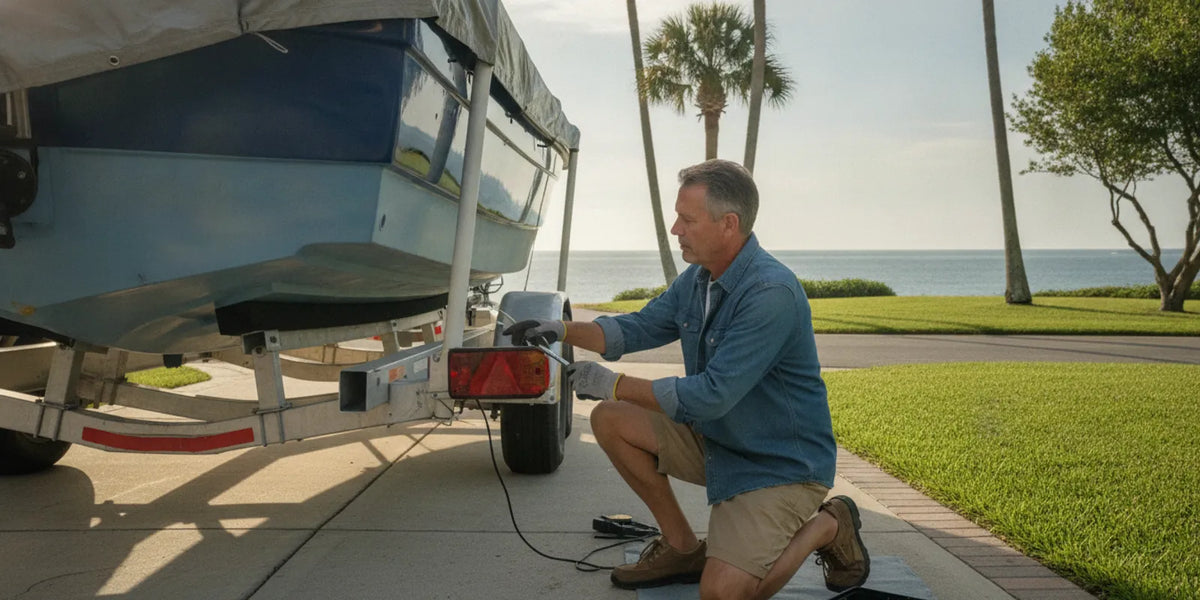
Choosing boat trailer parts starts with identifying the fault and confirming what the trailer actually needs. A replacement that looks similar may not match the mounting, wiring, dimensions, or load requirements. Before ordering, document the trailer and component, narrow down the symptom, and use reliable specifications rather than appearance alone.
Call Apollo for marine lighting product-selection help
By Maria Villanueva, Sales
Start by identifying the part and the problem
Use the symptom to guide inspection, but do not treat it as a diagnosis. A trailer light that stays dark could have a failed lamp, a corroded connector, damaged wiring, or a problem in the vehicle-side connection. A wheel-end noise or unusual heat deserves prompt attention, but it does not reveal by itself which part has failed. Write down what happened, when it happens, and what you have already checked.
Record the trailer manufacturer, model, year if known, and any identification numbers on the trailer or component. Photograph the whole assembly, then take close images of labels, connectors, mounting points, and damage. If removing a part is necessary, take pictures before disassembly and keep fasteners or small components together so you can show how they fit.
For lighting questions, Apollo Lighting’s marine lighting collection is a place to review lighting products, but a product’s presence in a marine lighting category does not establish that it is a legal or compatible trailer-light replacement. Confirm the trailer’s requirements and the product details before purchase.
Which details matter when matching common parts?
The right information varies by component. Compare the existing part with trailer documentation and the replacement maker’s specifications. If an important measurement, rating, or connection is unknown, pause and ask a qualified parts professional or repair provider to help establish it.
- Lights and electrical connections: Note the lamp’s function and position, dimensions, mounting style, connector type, wire condition, and any markings on the existing fixture. Check whether the fault follows the lamp or remains with the circuit only if you can do so safely. Do not assume that a marine light is automatically suitable for a trailer application.
- Tires and wheels: Photograph the sidewall markings and wheel, and record relevant dimensions from the trailer documentation. Replacement suitability depends on the trailer and its load, not just whether the tire or wheel appears to fit. Ask for help if markings are unreadable or the load requirements are unclear.
- Hubs and bearings: Note noises, leakage, visible damage, or unusual heat after use, and share those symptoms with a qualified professional. Do not select a bearing from appearance alone; assemblies and dimensions can vary.
- Coupler and safety hardware: Record identifying marks and dimensions, and look for cracks, deformation, corrosion, missing hardware, or insecure attachment. An uncertain rating or damaged component is a reason to stop rather than improvise.
- Brakes, suspension, frame, bunks, and rollers: Document visible condition and what the trailer does differently. Brake, structural, and suspension faults can affect safe towing, so have uncertain or damaged components assessed by a qualified repair provider.
How can you compare replacement options?
Compare parts by application, fit, connection, and requirements—not by a broad label or a photo. The checklist below helps organize the details to confirm before purchase; it is not a substitute for the manufacturer’s instructions or professional assessment.
| Part group | Information to confirm | When to get qualified help |
|---|---|---|
| Lights and wiring | Function, mounting, connector, markings, and wiring condition | The cause is unclear, wiring is damaged, or application requirements are uncertain |
| Tires, wheels, hubs | Trailer details, component markings, dimensions, and load suitability | Heat, noise, looseness, damage, or unknown fit and rating |
| Coupler and safety hardware | Dimensions, identification, attachment, and applicable rating | Cracks, deformation, insecure fit, or uncertain rating |
| Brakes, frame, suspension | Photos, symptoms, trailer identification, and service information | Any safety-critical, structural, or unexplained fault |
What is a careful process for planning a repair?
- Make the trailer safe to inspect. Park on firm, level ground and secure the tow vehicle and trailer. Use equipment and procedures appropriate to the work. Never work beneath a trailer supported only by a jack.
- Document before taking anything apart. Photograph the issue and record trailer and part identifiers. Note which side or position the part came from, and keep left/right or front/rear distinctions clear.
- Confirm specifications. Check the trailer or component documentation and compare the replacement’s measurements, connection, intended use, and any applicable rating. Ask a knowledgeable supplier when documentation is missing or ambiguous.
- Know when to stop. Do not tow if you believe a wheel, coupler, brake, frame, or other safety-critical system may be unsafe. Get qualified help for structural damage, uncertain brake problems, or faults beyond your experience.
- Follow the maker’s instructions and test carefully. Do not modify safety-critical parts or improvise substitutes when fit or rating is uncertain. After a repair, verify secure installation and test the affected system in a controlled setting before towing or launching.
For wider federal boating safety information, consult the U.S. Coast Guard. This general guidance does not replace trailer or component instructions or an inspection by a qualified professional.
When should you ask for product-selection help?
Ask for assistance when the part label is missing, measurements do not agree, a connector is unfamiliar, or the symptom could have more than one cause. Have the trailer details, clear photos, existing markings, and a short description of the fault ready. These details make it easier to discuss the right product category without guessing about compatibility.
Apollo Lighting is a Fort Lauderdale marine-equipment retailer specializing in marine lighting, with more than 30 years serving boaters and its own line of marine lights. The team provides product-selection assistance to boat owners and marine professionals. Apollo sells online to regions where delivery is offered and through its Fort Lauderdale store; it is not a trailer repair service, so confirm trailer-specific fit and safety requirements with the trailer maker or a qualified repair provider. You can also browse Apollo’s marine-equipment articles for related equipment topics.
Call Apollo to discuss marine lighting selection
A measured inspection and accurate part identification help you make a clearer repair plan and avoid choosing a replacement based only on how it looks.