
Dock Lights: How to Choose Safe, Durable Marine Lighting
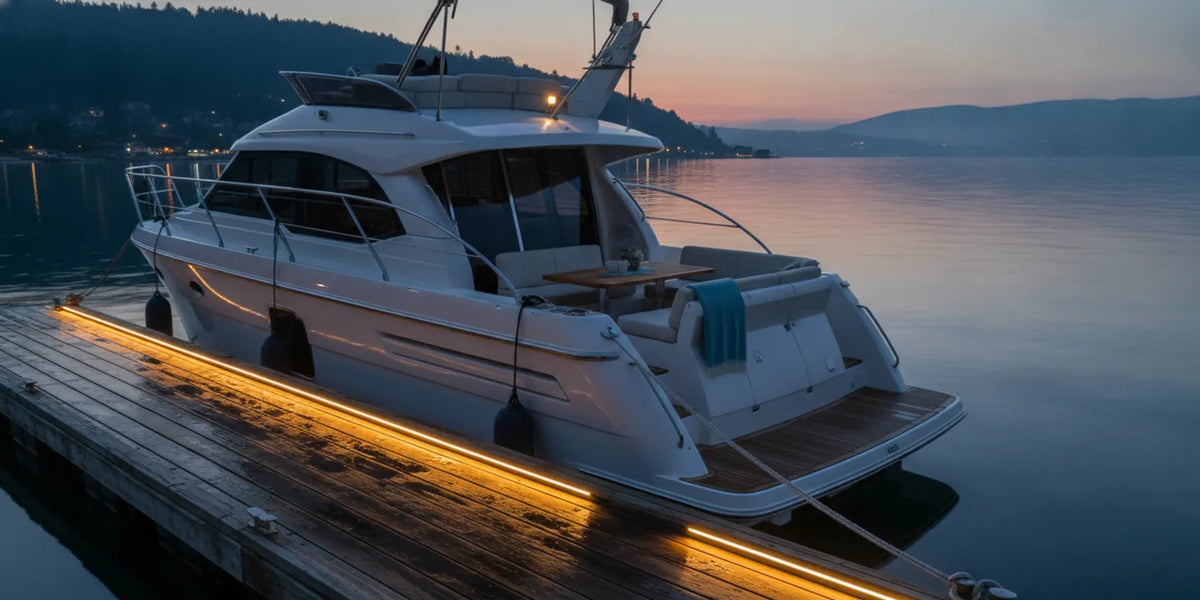
Choosing dock lights starts with the activities around the water, not with a fixture’s appearance. Boat owners and marine professionals can plan lighting by mapping where people walk, board, and handle gear, then checking the specific product’s intended use and installation details. This guide covers practical decisions for a waterfront dock without assuming one light or layout suits every site.
Talk through your marine lighting project
By Maria Villanueva, Sales
What should dock lights help you see?
Begin by listing the tasks that take place after dark. Someone might walk from shore to a boat, step aboard, handle a mooring line, or carry equipment along the dock. Each activity happens in a different spot and involves a different view. A light that helps someone find a route may not be positioned well for a boarding step or a work area.
Make a simple site list: shore entry, walkway, turns, changes in level, boarding points, and places where people handle lines or gear. Note which areas need visibility and who will use them. This turns a vague goal such as “make the dock brighter” into a project plan that can guide product selection.
Consider the view from more than one position. A bright source pointed toward someone’s face can create glare, even if the dock itself looks well lit from shore. Think about how a person walking on the dock and a boater approaching from the water will see each fixture. The aim is useful visibility for the task, not simply the highest brightness or the largest number of lights.
How can you plan placement before choosing fixtures?
Walk the route in daylight and sketch its important features. Mark the mounting surfaces and the direction people face as they approach or board. Then consider where a light could illuminate a walking surface without shining directly into the usual line of sight. Where practical, review the route after dark, too. Shadows and reflections can look different at the site than they do on a drawing.
- Walkways: Identify dark stretches, turns, and changes in level that matter along the route.
- Boarding areas: Note where a person steps between dock and boat and where hands need to locate a line or handhold.
- Gear and line areas: Mark spots where people perform a task, then consider how to illuminate the work without aiming a bright source at eye level.
- Water approach: Check the view from the boat so a fixture does not create unwanted glare for someone coming alongside.
- Neighbors and surroundings: Consider whether light spills beyond the area that needs illumination.
A plan can help reveal that one trouble spot needs attention rather than the whole dock needing more fixtures. It also gives you a useful description to share when asking for product-selection help. Include approximate dimensions and photos or a sketch if available, but verify final measurements and installation needs for the chosen product.
What does waterfront durability mean?
A dock exposes equipment to conditions that differ from an indoor room. Depending on the location, a fixture may encounter moisture, salt or fresh water exposure, sun, temperature changes, or contact with people and gear. Do not assume that a product is suitable for a particular waterfront location because it looks sturdy or carries a broad marine-related label.
For each candidate, read the manufacturer’s current product information and installation instructions. Check the stated application, environmental limitations, mounting method, electrical requirements, and care guidance. If the documentation does not address a condition that matters at your site, ask for clarification before buying. The suitability of a specific fixture depends on its published specifications and the installation location.
Maintenance deserves a place in the plan. Consider whether the fixture can be reached for inspection and cleaning, and whether its position is exposed to routine knocks from lines, equipment, or foot traffic. A hard-to-reach light may be inconvenient to inspect. A location that is easy to reach may still be unsuitable if it exposes the fixture or wiring to conditions outside the manufacturer’s instructions.
How do dock lights differ from boat navigation lights?
Dock lighting is intended to illuminate areas around the dock. Vessel navigation lights serve a separate purpose on a boat. Do not treat a dock fixture as a substitute for a vessel’s required lights. For information about boating safety and applicable vessel requirements, consult the U.S. Coast Guard’s boating safety resources and check the requirements for the specific vessel and use.
If a project involves navigation lights, wiring, or other marine electrical components, identify the exact product and application. Do not infer that two products are interchangeable because both are used in marine settings. Confirm product specifications and installation requirements, and seek qualified guidance when the electrical or regulatory details are unclear.
How should you compare dock-lighting options?
Compare products against the site and the task, rather than choosing by appearance alone. Use this checklist when reviewing a product listing or manufacturer documentation:
- Purpose: State which area or activity the light is meant to support.
- Location: Note the mounting surface, exposure, and likelihood of routine contact.
- Direction: Consider where the light will point and whether it may shine into a walker’s or boater’s view.
- Product fit: Confirm that the manufacturer identifies the product for the intended application.
- Electrical details: Verify the specific model’s voltage, wiring, control, and installation requirements in its documentation.
- Ongoing care: Check inspection access and follow the product’s stated maintenance instructions.
- Open questions: Write down any missing detail instead of assuming it will work with existing equipment.
For example, imagine that a dock has a dark turn near the shore and a separate boarding area. Record those as two distinct needs. For each one, note the mounting surface, likely viewing direction, and exposure. Then compare candidate products against those conditions. This avoids selecting a fixture just because it appears attractive in a catalog, while leaving the actual problem unsolved.
Keep a short record of the product name or model, the location it is being considered for, and any questions still open. This makes it easier to discuss a project with a knowledgeable product source. Apollo Lighting is a Fort Lauderdale marine equipment retailer specializing in marine lighting, with online sales where delivery is offered. Its assortment includes navigation, courtesy, underwater, downlight, and linear LED lights, as well as Apollo-brand marine lights. Product categories do not establish that a particular item is suitable for dock use, so check the exact product information.
To browse marine lighting options, visit Apollo Lighting’s marine lighting collection. For other boat-project equipment and store information, visit the Apollo Lighting online store. Review each listing for current product details and intended use; do not assume that separate components are compatible without confirmation.
What should you confirm before ordering?
Before placing an order, check the product’s dimensions, electrical requirements, mounting approach, intended environment, and installation limitations. Compare those details with your site notes. If a key measurement or requirement is unknown, pause to clarify it rather than treating a general category description as proof of fit.
Think about the full project, too. A lighting plan may involve wiring, power, switches, and controls in addition to the fixture. Apollo’s catalog includes marine switches and electrical equipment, but the fact that items appear in related categories does not confirm that they work together. Verify the product documentation for each component and consult a qualified professional when the installation requires it.
Review checkout and item details for current shipping options and destination eligibility. For in-person product questions, Apollo Lighting’s Fort Lauderdale store and support can help boat owners and marine professionals frame a selection question. Share the planned location, task, and any relevant product model so the discussion can focus on verified information rather than assumptions.
Ask Apollo about marine lighting product selection
Frequently asked questions
Can any marine light be used as a dock light?
No. A broad marine label does not establish that a particular fixture is suitable for dock installation. Check the manufacturer’s stated application, environmental limits, mounting instructions, and electrical requirements for the exact product.
What is the first step in planning dock lights?
List the activities and routes the lighting should support, then mark the shore entry, walkway, boarding areas, and work locations. Those notes give you a practical basis for considering placement and comparing products.
How can I think about glare?
Consider the view from the walkway and from a boat approaching the dock. Think about positioning and direction so the needed surface is illuminated without placing a bright source directly in a person’s usual line of sight. The right layout depends on the site and the fixture.
Should dock lighting replace a boat’s navigation lights?
No. Dock lighting and vessel navigation lights serve different purposes. Check the applicable vessel requirements and use products only for the applications identified by their manufacturers.
A useful dock-lighting plan starts with people, tasks, and site conditions. Map the route, evaluate visibility from the dock and water, and verify product documentation before choosing a fixture.