


Garmin Wind Instrument Pack, NMEA 2000, gWind Transducer


-
Perfect Fit, Guaranteed
Get the right part every time
-
Expert Support
Our in-house specialists know our products inside and out
-
Enhanced Value & Service
We go beyond the sale with professional and balanced services
-
Wordwide Delivery
Enjoy hassle-free worldwide delivery
Garmin Wind Instrument Pack, NMEA 2000, gWind Transducer

Garmin Wind Instrument Pack, NMEA 2000, gWind Transducer
Overview
The Garmin GNX Wireless Wind Pack is a family of sailing instrument bundles that puts wind data where you can use it and shares it across a NMEA 2000 network, with options for wireless or wired wind sensing and optional thru-hull sensors for depth, boat speed, and water temperature.
When the package includes the GNX Wind instrument, it takes power and data from NMEA 2000 (9 to 16 Vdc input) and carries an IPX7 water rating. The unit footprint is 110 x 115 x 30 mm, and the recommended compass-safe distance is 209 mm, which helps when you are planning a helm layout.
Wireless configurations use a gWind Wireless 2 masthead transducer that sends wind data over ANT and avoids running a cable in masts up to 50 feet. Thru-hull options are offered in 43 mm or 52 mm sizes, with the 43 mm configurations using separate depth and speed sensors and the 52 mm configurations using a multi-sensor thru-hull.
Key features
- Wind sensor options across the range: wireless gWind Wireless 2 over ANT or a wired gWind masthead transducer
- Wireless wind sensor fit for refits: no mast cable required for masts up to 50 feet
- GNX Wind instrument option: NMEA 2000 interface and power (9 to 16 Vdc input), IPX7 water rating, 110 x 115 x 30 mm case size
- GNX Wind pages support true and apparent wind with a digital wind rose and two data fields
- 43 mm thru-hull configurations include GDT 43 (depth) and GST 43 (speed and water temperature) sensors to match 43 mm fittings
- 52 mm thru-hull configurations include an Airmar DST810 smart thru-hull sensor for depth, speed, water temperature, plus heel and trim and pitch and roll data
- Instrument bundle choices can include GNX 20 and or GMI 20 displays for additional viewing locations on board
- On-screen orientation adjustment is available for wind angle alignment when the masthead sensor cannot be mounted perfectly on centerline
Variants
Configurations vary by wind sensor type (wireless or wired), thru-hull sensor fit (none, 43 mm, or 52 mm), and which instrument displays are included (GNX Wind, GNX 20, and or GMI 20).
The 43 mm option is built around separate depth and speed sensors sized for 43 mm fittings, while the 52 mm option uses a multi-sensor thru-hull that also reports heel and trim and pitch and roll data. Wireless and wired versions differ mainly in how wind data gets from the mast to the network and displays.
Installation and setup
Plan the network first. These packs are meant to live on a NMEA 2000 backbone, so the helm display(s) and any thru-hull sensors share a powered, terminated network with the rest of your instruments and chartplotter. If you are starting from scratch, allow room for a backbone run, a power tee, terminators, and drop cables to each device.
At the masthead, the wind transducer should sit on a horizontal surface and point forward, parallel to the boat centerline. If the masthead geometry forces a slight offset, the wind-angle orientation can be corrected in the instrument settings after installation.
Compatibility and system integration
Wind, depth, and speed data can be shared on the NMEA 2000 network so other connected displays and chartplotters can use it for sailing pages and data overlays. Wireless wind configurations send wind data via ANT to compatible devices, which is helpful when you want to avoid pulling a mast cable during a refit.
For the 52 mm multi-sensor thru-hull option, calibration can be performed over Bluetooth using the Airmar Cast app. As with any instrument upgrade, confirm the available mounting locations, cable routes, and the network layout before committing to a specific configuration.
Thru-hull fit and hull work
If you are adding a thru-hull sensor, match the configuration to your hull and existing cutout. The 43 mm option is commonly used when a boat already has 43 mm fittings, while the 52 mm option is intended for a 52 mm installation. Either way, thru-hull work is typically done during haul-out and should be bedded correctly for the hull material and installation location.
Maintenance and care
Rinse salt off moving parts after heavy weather and avoid blasting the wind sensor with high-pressure water. For long layups, removing the masthead unit and storing it dry helps, and storing it where it is exposed to light helps maintain the charge on wireless versions.
Use on board
This pack family is a good match for sailors building out a NMEA 2000 instrument setup, and for refits where running new cabling through the mast is the hard part. It also suits race crews and cruisers who want stable wind angle and speed data at the helm with room to add extra displays.
We ship all in-store (FL) stock orders the same day if placed before 3 PM EST, Monday through Friday. Orders placed after this time will ship the next business day. Orders fulfilled from other warehouses or manufacturers may not ship the same day. If an item is out of stock, we will notify you promptly.
Related Products
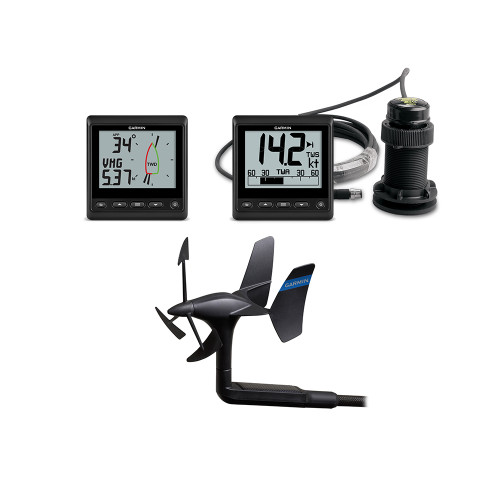
Garmin GNX Wireless Sail Pack 52, GNX Wind, GNX 20, gWind Wireless 2, DST800, NMEA 2000
Out of stock
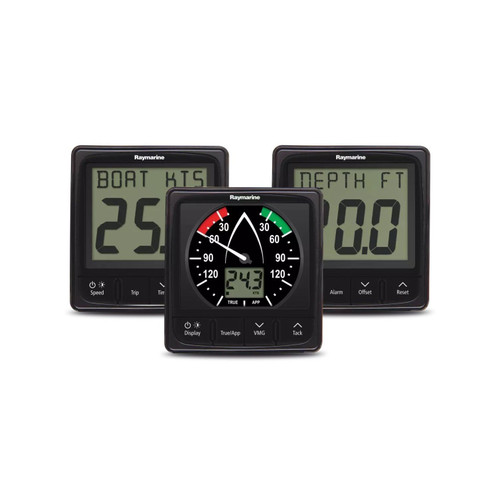
Raymarine i50/i60 Wind, Speed & Depth Instrument Pack, Transducers Included, SeaTalkNG, NMEA 2000, SeaTalk

Garmin gWind & GND 10 Wind Transducer Replacement Propeller, 3-Blade
Out of stock

Garmin gWind Wind Transducer Only, Twin-Fin Design, 3-Bladed Propeller
Out of stock

Garmin Mast Cable, For gWind and gWind Race Transducers, 11mm OD