


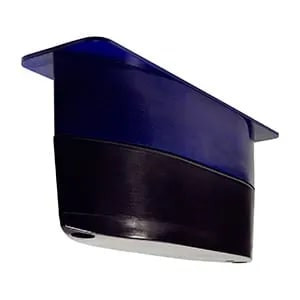
Garmin Airmar R109LHW Thru-Hull Transducer, 2kW, 38-75kHz and 150-250kHz, Depth & Temp

-
Perfect Fit, Guaranteed
Get the right part every time
-
Expert Support
Our in-house specialists know our products inside and out
-
Enhanced Value & Service
We go beyond the sale with professional and balanced services
-
Wordwide Delivery
Enjoy hassle-free worldwide delivery
Garmin Airmar R109LHW Thru-Hull Transducer, 2kW, 38-75kHz and 150-250kHz, Depth & Temp

Garmin Airmar R109LHW Thru-Hull Transducer, 2kW, 38-75kHz and 150-250kHz, Depth & Temp
Overview
The Garmin 010-12182-20 is a 2 kW thru-hull transducer built around the Airmar R109LHW element, with CHIRP coverage across 38 to 75 kHz and 150 to 250 kHz.
It pairs a low band for deep-water sounding with a high wide band that holds a 25° beam across the range, which helps when you want more coverage under the boat while working shallower water.
The urethane housing uses a fairing-style mount to account for hull deadrise up to 22°, and it also provides depth and fast-response water-temperature sensing.
Key features
- 2 kW dual-band CHIRP: 38 to 75 kHz (low) and 150 to 250 kHz (high wide)
- High wide band keeps a constant 25° beam for broader coverage in shallower depths
- Low band beamwidth varies across the range (19° to 10° port-starboard; 10° to 5° fore-aft)
- Thru-hull, external-mount housing with fairing-style mounting for deadrise up to 22°
- Depth and water-temperature sensing
- 49 ft (15 m) cable for routing to a sonar module at the helm
- Bare-wire termination for hard-wiring to compatible sonar equipment
- Xducer ID technology for transducer identification on supported systems
Compatibility and fit
This is a dual-band, CHIRP-ready transducer. It requires sonar hardware that supports a 2 kW transducer and the 38 to 75 kHz and 150 to 250 kHz bands. Confirm both frequency support and your sounder’s wiring method before committing to the hull cutout.
The housing is listed as compatible with common hull materials, but thru-hull installs still depend on proper bedding, access inside the bilge, and good cable routing. Plan the location so the face stays in clean water at speed and is clear of strakes, steps, and trailer bunks.
Installation and setup
Most thru-hull installs are a haul-out job. Measure deadrise at the mounting point and align the fairing so the transducer face sits square to the water flow. On cored fiberglass, seal the core around the hole to keep water out of the laminate.
Route the cable away from ignition wiring, alternator leads, and other high-current runs when possible. Leave a service loop so the transducer can be inspected without stressing the cable.
Use on board
This setup fits boats that split time between deeper drops and nearshore structure. The low band handles the deeper work, while the high wide band is useful when you want coverage and clear targets in the upper water column.
Maintenance and care
Inspect the outside face for growth and clean it with a non-abrasive pad as needed. During seasonal service, check the bedding line and the inside hardware for any sign of movement or seepage, especially after trailering or hard impacts.
We ship all in-store (FL) stock orders the same day if placed before 3 PM EST, Monday through Friday. Orders placed after this time will ship the next business day. Orders fulfilled from other warehouses or manufacturers may not ship the same day. If an item is out of stock, we will notify you promptly.
Related Products


Garmin Airmar R109LM Thru-Hull Transducer, 2kW, Low/Mid CHIRP, Bare Wires
Out of stock

Garmin Airmar B117 Bronze Thru-Hull Transducer, 50/200 kHz, 600W, Depth/Temp, 6-Pin
Out of stock

Airmar R509C-LM Low/Med Chirp 3KW Thru-Hull Mount Depth/Temp Transducer
Out of stock

Airmar - R509C-LH Low/High Chirp 3KW Thru-Hull Mount Depth/Temp Transducer
Out of stock
Garmin B175 Bronze Thru-Hull CHIRP Transducer, 1kW, Depth/Temp, 8-Pin