


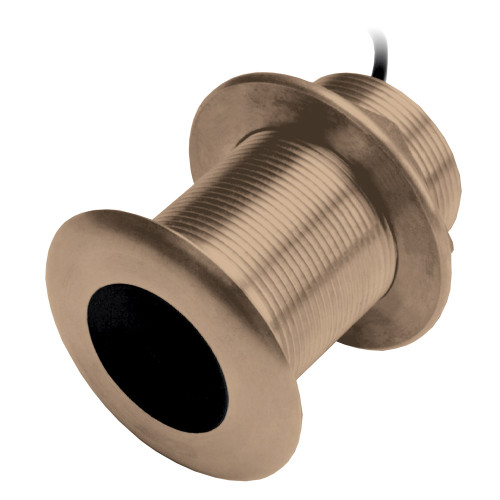
Simrad xSonic B150M 20° CHIRP Thru-Hull Transducer, For 16-24° Deadrise Hulls, 300W, 95-155 kHz, Depth/Temp, Bronze Housing, 9-Pin Connector, 10m Cable

-
Perfect Fit, Guaranteed
Get the right part every time
-
Expert Support
Our in-house specialists know our products inside and out
-
Enhanced Value & Service
We go beyond the sale with professional and balanced services
-
Wordwide Delivery
Enjoy hassle-free worldwide delivery
Simrad xSonic B150M 20° CHIRP Thru-Hull Transducer, For 16-24° Deadrise Hulls, 300W, 95-155 kHz, Depth/Temp, Bronze Housing, 9-Pin Connector, 10m Cable

Simrad xSonic B150M 20° CHIRP Thru-Hull Transducer, For 16-24° Deadrise Hulls, 300W, 95-155 kHz, Depth/Temp, Bronze Housing, 9-Pin Connector, 10m Cable
Overview
The Simrad 000-13922-001 is an XSONIC B150M thru-hull CHIRP transducer with a 20° tilt, a 9-pin connector, and a 10 m cable for Simrad sonar installations.
It runs a medium CHIRP band from 95 to 155 kHz at 300 W and reports both depth and water temperature. Medium CHIRP is a practical choice when you want clear fish separation and bottom detail from shallow water into moderate depths, whether you are working reefs, wrecks, and ledges, or covering open water.
The bronze housing suits fiberglass and wood hulls where a flush thru-hull install is the cleanest option. Depth range depends heavily on hull construction, installation location, sea state, and target conditions.
Key features
- Medium CHIRP operation: 95 to 155 kHz with 300 W output
- 20° tilted element to keep the beam closer to straight down on hulls with deadrise
- Depth and water temperature sensing in one thru-hull fitting
- Bronze thru-hull housing suited to fiberglass and wood hull applications
- 9-pin transducer connector with a 10 m cable for flexible routing to the display or sounder module
- Beam coverage that narrows across the band (about 26° to 17°) to balance area coverage and target separation
- Strong bottom tracking when mounted in clean water flow and installed with correct angle and seal
Compatibility and fit
This transducer is intended for sonar systems that support medium-band CHIRP and accept a 9-pin transducer connection. Before ordering, confirm your sounder or multifunction display supports CHIRP and that the connector type matches your sonar port or adapter setup.
Plan the install location so the transducer face sits in solid, non-aerated water at speed. That placement matters as much as the transducer itself for consistent bottom lock and clean target returns.
Installation and setup
Thru-hull installs are typically set ahead of turbulence sources like steps, strakes, and intakes, and away from prop wash. The 20° tilt helps align the element without a fairing block, but the final mounting angle still needs to match the hull area where it is installed.
Dry-fit the cable run before drilling so the 10 m lead reaches the sonar connection without hard bends, pinch points, or chafe. Use proper marine bedding and strain relief, and keep the connector protected from water during routing and service work.
Use on board
The medium CHIRP range works well for coastal and near-offshore fishing where you want one thru-hull to cover mixed depths. You will see wider coverage at the lower end of the band and a tighter beam as frequency increases, which helps when you are watching fish tight to structure or separating targets near the bottom.
Maintenance and care
Keep the transducer face clean for consistent performance. In heavy growth areas, use a transducer-safe antifouling coating and avoid scraping or sanding that can damage the acoustic surface.
Periodically check the external housing, the inside nut, and the cable where it passes through bulkheads for tightness and chafe, especially after trailering or a hard season offshore.
We ship all in-store (FL) stock orders the same day if placed before 3 PM EST, Monday through Friday. Orders placed after this time will ship the next business day. Orders fulfilled from other warehouses or manufacturers may not ship the same day. If an item is out of stock, we will notify you promptly.
Related Products


Simrad xSonic B150M CHIRP Thru-Hull Transducer, 12 Deg Tilt, 95-155 kHz, 300W, Bronze, 9-Pin, 10m Cable, Depth/Temp Sensor
Out of stock


Simrad XSonic Airmar B150M CHIRP Thru-Hull Transducer, 0° Tilt, 95-155 kHz, 300W, Bronze Housing, 9-Pin, 10 m Cable
Out of stock
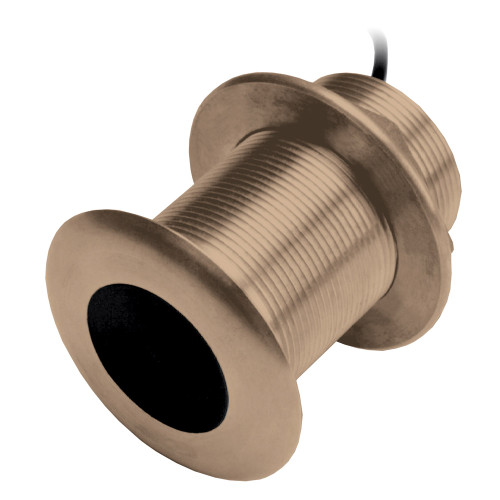
Garmin Airmar B150M Thru-Hull CHIRP Transducer, 300W, 8-Pin, 95-155 kHz, Bronze Housing
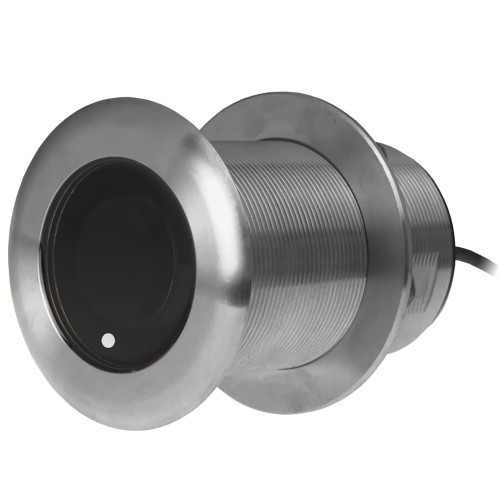
Simrad XSonic SS75H Depth/Temp Thru-Hull CHIRP Transducer, Stainless Steel Housing, 130-210kHz, 600W, 12 Degree Tilt, 9-Pin, 10m Cable
Out of stock

Raymarine B150M CHIRP Thru-Hull Transducer, 300 W, 20° Tilt, 95-155 kHz, Bronze Housing
Out of stock