


Garmin Panoptix LVS32 Transducer, GLS 10 Required, LiveScope Forward/Down


-
Perfect Fit, Guaranteed
Get the right part every time
-
Expert Support
Our in-house specialists know our products inside and out
-
Enhanced Value & Service
We go beyond the sale with professional and balanced services
-
Wordwide Delivery
Enjoy hassle-free worldwide delivery
Garmin Panoptix LVS32 Transducer, GLS 10 Required, LiveScope Forward/Down

Garmin Panoptix LVS32 Transducer, GLS 10 Required, LiveScope Forward/Down
Overview
The Garmin Panoptix LiveScope LVS32 is a live sonar transducer that pairs with a GLS 10 sonar module to show LiveScope Forward and LiveScope Down views on a compatible Garmin chartplotter. It operates from 530 to 1,100 kHz and supports live scanning out to 61 m (200 ft.), with a 135 degree front-to-back field of view and 20 degrees side-to-side.
On the water, the picture refreshes as you move, so you can watch fish, bait, and structure in real time while drifting, holding on a spot, or easing along a break line. AHRS and compass calibration options help keep the view steady when the boat rocks, and the transducer can be oriented between forward and down views depending on how you mount it.
Key features
- LiveScope Forward and LiveScope Down views from one transducer, with mount orientation set for the view you want
- Operating frequency from 530 to 1,100 kHz, with live scanning up to 61 m (200 ft.)
- Field of view: 135 degrees front-to-back and 20 degrees side-to-side
- Connects to the GLS 10 sonar module and displays on compatible Garmin chartplotters over the Garmin Marine Network
- AHRS and internal compass calibration options available in the sonar installation settings
- Compact housing at 136.4 x 96.5 x 44.5 mm, with 850 g transducer-only weight
Variants
This transducer is offered in multiple mounting styles so you can match your hull layout and how you fish.
Across the range, the sonar modes and core specs stay the same, including LiveScope Forward and LiveScope Down, a 530 to 1.1 MHz operating range, and live scanning up to 200 ft. The difference is where the transducer sits and how the install is handled.
- 010-12928-01: Mounting style: Thru-hull mount. This version installs through the bottom of the hull, uses an anti-rotation bolt, and relies on careful sealing at the hull interface to keep the installation watertight.
- 010-12784-03: Mounting style: Transom or trolling motor mount. This version mounts on the transom or a trolling motor setup, with orientation adjustments that let you switch between forward and down views without tools.
Installation and setup
Mount placement matters more than most accessories in a sonar system. Keep the transducer away from strakes, struts, intakes, discharges, and other features that create air bubbles or turbulent water, and place it where it will not be jarred during launching, hauling, or storage. On single-drive boats, avoid the prop wash path; on twin-drive setups, a position between the drives is typically preferred when space allows.
For transom installations, the top of the transducer is set even with, or up to 12.7 mm (1/2 in.) above, the bottom edge of the transom. Secure all mounting points as intended, especially on boats that run at higher speeds, and route the cable away from electrical interference and any pinch points when trimming the engine or stowing a trolling motor.
For thru-hull installations, the transducer and fairing alignment is set parallel to the keel, and the stem hole is drilled perpendicular to the water surface. If the deadrise angle at the mounting point exceeds 5 degrees, a fairing block is used to keep the transducer face aligned correctly, and metal hull installs require an isolation plate.
Electrical and system integration
The transducer connects to the GLS 10 sonar module, and the GLS 10 connects to your compatible Garmin chartplotter over the Garmin Marine Network. Plan a mounting location for the sonar module that stays dry, has ventilation, and allows easy access to the network, power, and transducer connections.
Power for the sonar module supports 10 to 32 Vdc, which fits common 12V and 24V onboard systems when wired correctly. A 7.5 A fast-acting fuse is used on the power feed, and cable routing should be kept clear of sharp edges, moving parts, and high-current wiring where possible.
Maintenance and care
Keep the transducer surface clean, since growth and fouling can quickly reduce sonar performance. Clean it with a soft cloth and mild detergent, then wipe it dry. When applying anti-fouling, use water-based paint and avoid ketone-based products that can damage plastics.
Use cases on board
This setup is a strong fit for anglers who want to watch fish and structure move in real time when working reefs, docks, bridge pilings, or bait schools. It also suits crews who need quick feedback while hovering on a spot, slowly trolling, or adjusting boat position in current and wind.
We ship all in-store (FL) stock orders the same day if placed before 3 PM EST, Monday through Friday. Orders placed after this time will ship the next business day. Orders fulfilled from other warehouses or manufacturers may not ship the same day. If an item is out of stock, we will notify you promptly.
Related Products
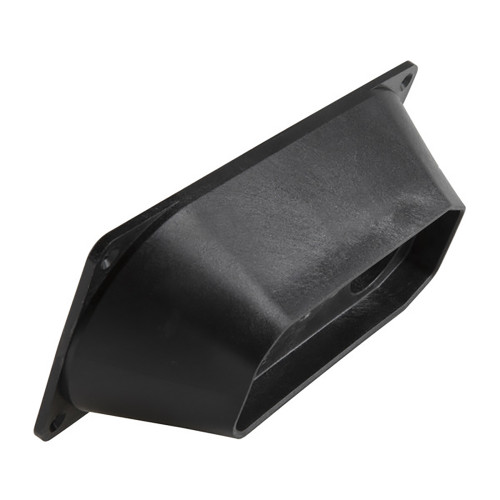
Garmin Panoptix LiveScope LVS32 Thru-Hull Fairing Block, For LVS32-TH Thru-Hull Down Transducer
Out of stock
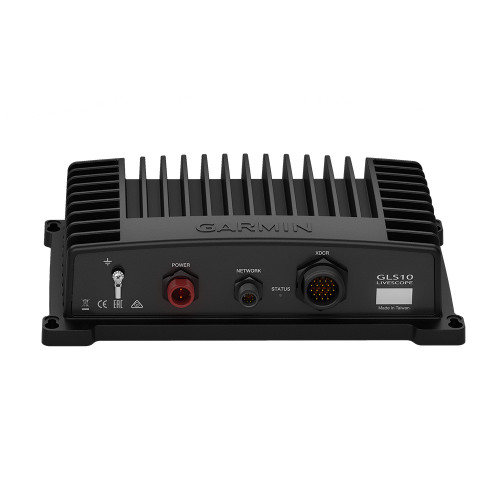
Garmin LiveScope GLS 10 Sonar Module, For LVS32 Transducer, 10-32V, IPX7

Garmin Panoptix LiveScope Perspective Mode Mount, For LVS32 Transducer, Trolling Motor Mount
Out of stock


Garmin Panoptix LiveScope Ice Fishing Kit, For ECHOMAP/GPSMAP, LVS32 Transducer, GLS 10 Sonar Module, 200 ft, 12Ah Battery
Out of stock

Garmin LiveScope Pole Mount, for LVS32 Transducer, 0 Degree