


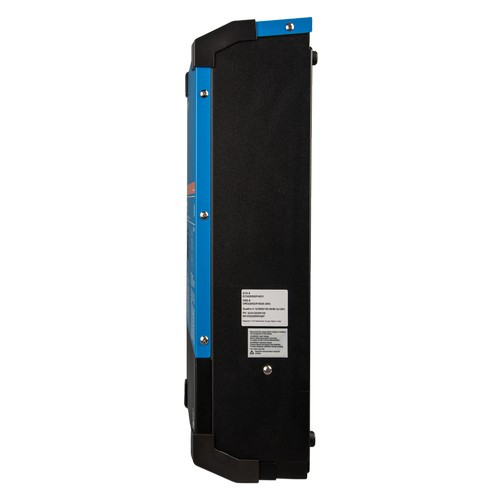
Victron Energy Quattro-II 2x120V Inverter/Charger, 3000VA




-
Perfect Fit, Guaranteed
Get the right part every time
-
Expert Support
Our in-house specialists know our products inside and out
-
Enhanced Value & Service
We go beyond the sale with professional and balanced services
-
Wordwide Delivery
Enjoy hassle-free worldwide delivery
Victron Energy Quattro-II 2x120V Inverter/Charger, 3000VA

Victron Energy Quattro-II 2x120V Inverter/Charger, 3000VA
Overview
The Victron Energy Quattro-II 2x120V is a 3000 VA inverter/charger for North American 120/240VAC split-phase boats and other mobile AC systems. It combines a sine-wave inverter, adaptive battery charger and transfer switching in one unit, giving a vessel a central AC power hub for shore power, generator input and battery-backed onboard loads.
The unit accepts two AC inputs, so a boat can be wired for both shore power and a generator, with automatic selection of the active source. When split-phase 120/240VAC is available, it can pass through both lines; when running from the inverter, it supplies 120VAC single-phase power to both output legs, while 240VAC loads are only available when a split-phase AC source is present.
Key features
- 3000 VA inverter rating with 2400 W continuous output at 25 C and 5500 W peak power for short startup loads.
- Two AC inputs support common shore-power and generator arrangements, with automatic selection when voltage is present.
- 50A transfer switch and 50A maximum AC input current per leg suit standard North American 50A split-phase installations.
- PowerControl and PowerAssist help manage limited shore or generator current and can add battery power during brief AC load peaks.
- Two AC outputs allow critical loads on the main output and a second output that disconnects when the system changes to battery operation.
- VE.Bus communication supports parallel operation, three-phase operation, remote monitoring and integration with larger Victron systems.
- IP21 steel enclosure in blue RAL 5012 is intended for interior mounting in a dry electrical space rather than exposed deck or washdown areas.
Variants
This Quattro-II 2x120V range is offered in two battery-bank versions. The main selection point is the vessel DC system voltage, with the maximum battery charge current changing between the 12V and 24V models.
Both versions share the same 3000 VA AC class, two-input 2x120V architecture, 50A transfer switch, VE.Bus integration and IP21 enclosure. The DC input voltage range, charging setpoints, maximum charge current, zero-load consumption, efficiency and weight vary by version.
- QUA122305130: 12V battery voltage with 120A charge current. This version matches 12V house battery systems and gives the higher maximum charger output of the two models.
- QUA242305130: 24V battery voltage with 70A charge current. This version matches 24V house battery systems while keeping the same 3000 VA AC output class.
Electrical and system integration
The AC side is built around 120/240VAC split-phase service, a common setup on larger North American boats. With split-phase input connected, 240VAC equipment can operate from the AC source; in inverter mode, the unit ties L1 and L2 together internally so both sides of the distribution panel receive 120VAC, while 240VAC loads do not draw from the batteries.
The charger section supports adaptive charging for rechargeable lead-acid and LiFePO4 battery banks when the system is configured correctly. A second charge output is available for maintaining a starter battery, with output current limited to 4A.
Installation and fit
This inverter/charger should be installed by a qualified electrical installer in an area that stays dry and has good ventilation. It should be mounted close to the batteries to reduce voltage loss, with at least 10 cm of free space around the unit for cooling and with the interior remaining accessible after installation.
The enclosure measures 579 x 319 x 168 mm, or approximately 23 x 13 x 7 in. The 12V model weighs 23.8 kg, while the 24V model weighs 22.5 kg, so the mounting surface must be able to carry the unit securely in a moving vessel.
Use cases on board
This inverter/charger is a practical match for cruisers, fishing boats and liveaboard electrical systems that need one unit to handle shore power, generator input, battery charging and inverter-backed AC loads. It is especially relevant on boats with a 50A split-phase AC panel where some loads need 120VAC backup and heavier 240VAC equipment should remain tied to shore power or generator supply.
Maintenance and care
The unit does not require routine internal maintenance, but AC and DC connections should be checked periodically as part of the vessel electrical service schedule. Keep the mounting area dry, ventilated and clear of battery gases, salt spray and loose gear that could restrict cooling or affect electrical safety.
We ship all in-store (FL) stock orders the same day if placed before 3 PM EST, Monday through Friday. Orders placed after this time will ship the next business day. Orders fulfilled from other warehouses or manufacturers may not ship the same day. If an item is out of stock, we will notify you promptly.
Related Products


Victron Energy MultiPlus-II 2x 120V Inverter/Charger, 3000VA


Victron Energy MultiPlus-II Inverter/Charger, 12V, 3000VA, 120A Charger, 120V AC, 50A Transfer Switch

Victron Energy MultiPlus Inverter/Charger, 3000VA, 230V, 50A Transfer Switch, VE.Bus


Victron Energy Quattro Inverter/Charger, 230V, Two AC Inputs


Victron Energy MultiPlus-II Inverter/Charger, 120V, 5000VA