


Garmin Traditional Sonar Transducer





-
Perfect Fit, Guaranteed
Get the right part every time
-
Expert Support
Our in-house specialists know our products inside and out
-
Enhanced Value & Service
We go beyond the sale with professional and balanced services
-
Wordwide Delivery
Enjoy hassle-free worldwide delivery
Garmin Traditional Sonar Transducer
Overview
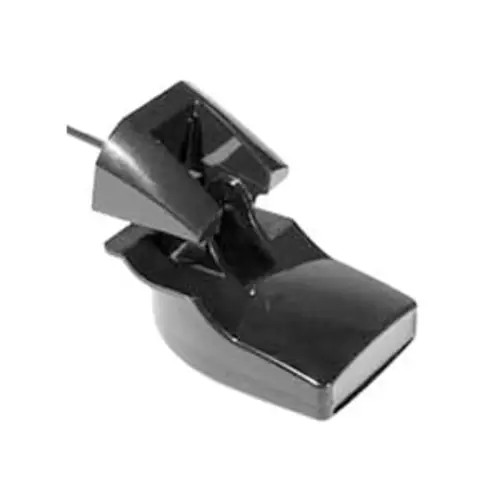
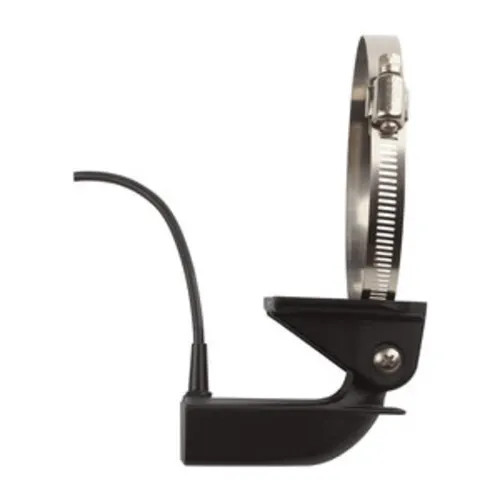
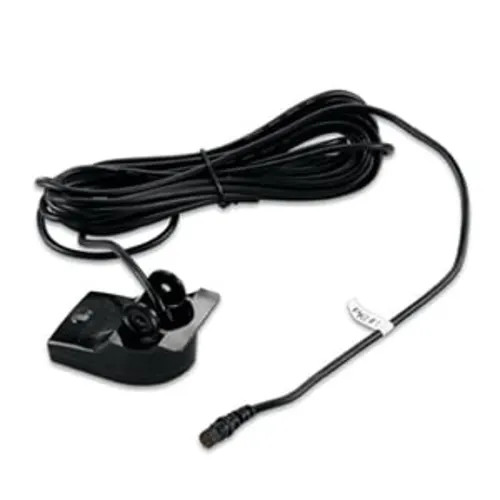
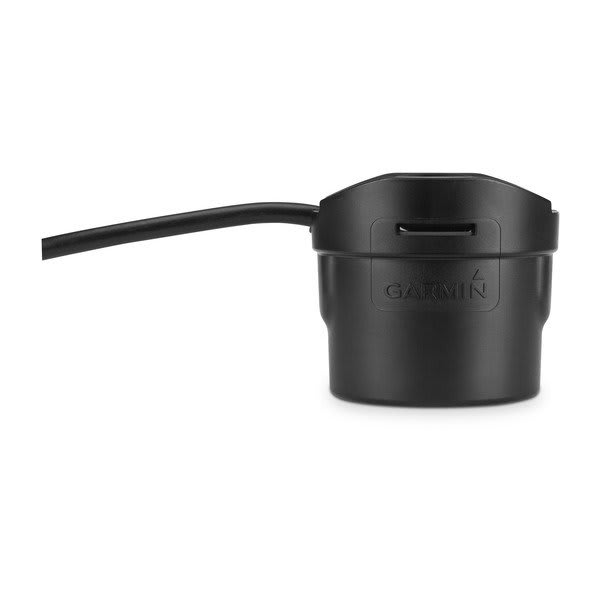
This Garmin traditional sonar transducer is offered with different connectors, mounting styles, and sonar elements so you can match your fishfinder and your hull. Options in this range include 4-pin or 8-pin plugs, transom or in-hull installation, and traditional sonar elements such as high-wide CHIRP (150 to 240 kHz, 250 W), mid-band CHIRP (85 to 165 kHz, 600 W), and fixed dual-frequency choices at 50/200 kHz or 77/200 kHz (500 W).
In-hull versions sit inside a solid fiberglass hull, which keeps the exterior of the boat clean and avoids the aerated water that can cause dropouts at speed. The high-wide in-hull option calls for a flat section with 0 to 6 degrees of deadrise, while the mid-CHIRP in-hull option supports 0 to 25 degrees. Transom-mount versions cover mounting angles up to 70 degrees, and some kits also support a trolling-motor mount.
Rated depth and beam coverage depend on the specific version, with published maximum depths spanning roughly 800 ft to 1,900 ft in freshwater. On the water, bottom hardness, hull noise, and speed all affect what you see on the screen, so matching the transducer style to how you run the boat matters as much as the numbers.
Key features
- Connector options in 4-pin and 8-pin to match the sonar port on your Garmin unit or an existing adapter cable.
- Traditional sonar choices across the range: 50/200 kHz dual-frequency (500 W), 77/200 kHz dual-beam (500 W), mid-band CHIRP 85 to 165 kHz (600 W), and high-wide CHIRP 150 to 240 kHz (250 W).
- Transom-mount versions list 30 ft cable runs and include depth plus water temperature sensing.
- High-wide CHIRP versions list a 20 ft cable run and a wide beam (24 to 16 degrees) for broader coverage in shallower water.
- In-hull mid-CHIRP option supports hull deadrise from 0 to 25 degrees for shoot-through installs in solid fiberglass.
- In-hull high-wide option calls for a flatter mounting location, listed for 0 to 6 degrees of deadrise.
- Transom-mount options list a wide transom-angle range, up to 0 to 70 degrees, for common outboard and sterndrive setups.
- Maximum depth ratings vary by model, ranging from about 800 ft to 1,900 ft in freshwater.
Variants
This listing groups multiple configurations that change by pin count (4-pin or 8-pin), installation (in-hull mount or transom mount), and the traditional sonar element (50/200 kHz, 77/200 kHz, mid-CHIRP, or high-wide CHIRP).
CHIRP versions require a sonar that supports CHIRP traditional. Fixed-frequency versions (50/200 or 77/200) are intended for traditional dual-frequency operation. Cable length also varies across the range, most commonly 20 ft or 30 ft, which can affect routing from the transom or bilge to the helm.
Compatibility and fit
Confirm the connector style on your Garmin sonar port before ordering, since both 4-pin and 8-pin versions exist in this range. If your sounder uses a different connector style, an adapter cable may be required. For CHIRP models, verify that your Garmin unit supports CHIRP traditional sonar on the channel you plan to use.
In-hull options are for shoot-through installation in solid fiberglass. They are not intended to transmit through metal hulls, and a cored hull or voids in the laminate can block the signal. Transom-mount options are the better match when you need the element directly in the water, or when the hull material does not allow shoot-through mounting.
Installation and setup
For transom mounting, plan on a location that stays in clean water when the boat is on plane, away from strakes and steps that introduce turbulence. The bracket needs to sit level at rest, and the transducer face should remain aligned so it tracks bottom consistently as speed comes up. Seal any fasteners through the transom and leave a smooth cable run with drip loops where water could track into the boat.
For in-hull mounting, pick a flat, solid section of fiberglass inside the bilge area and keep it clear of stringers, air bubbles, and areas that flex. Bonding is usually done with a resin or epoxy process so the transducer is coupled to the laminate with no trapped air. Take the time to test the location before you commit, since small changes in placement can make a big difference in what the sounder sees at speed.
On-board use
This range is a good match for anglers who want traditional sonar for depth, bottom detail, and fish arches, without adding SideVü or ClearVü hardware. In-hull options fit well on fast bass boats and similar fiberglass hulls where keeping the transducer protected and reading depth at speed is the priority, while transom options suit skiffs, pontoons, and center consoles that need a direct-in-water install with temperature sensing.
Maintenance and care
Keep the transducer face clean of growth and road grime, especially if the boat is kept in the water or trailered often. Periodically check bracket fasteners, cable clamps, and the connector for corrosion or looseness, and make sure the cable is supported so vibration does not work-harden it near the transom or inside the bilge.
We ship all in-store (FL) stock orders the same day if placed before 3 PM EST, Monday through Friday. Orders placed after this time will ship the next business day. Orders fulfilled from other warehouses or manufacturers may not ship the same day. If an item is out of stock, we will notify you promptly.
Related Products
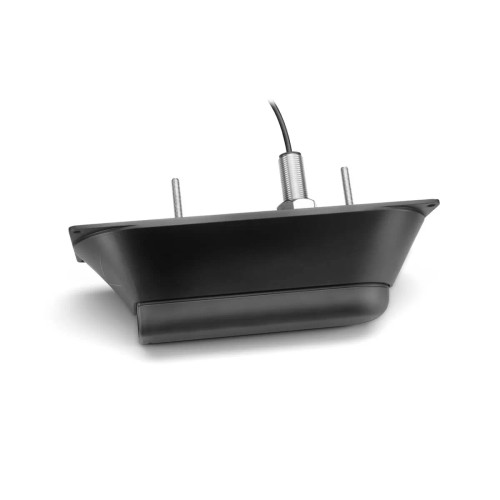

Garmin Fishfinder Transducer, Traditional Sonar, ClearVü

Garmin ClearVü/SideVü Sonar Transducer, CHIRP Traditional, 12-Pin, Temp Sensor


Garmin Ice Fishing Transducer, Multiple Sonar Types


Garmin GPSMAP 943xsv 9in Sonar Chartplotter, Navionics+, GT23-TM Transducer
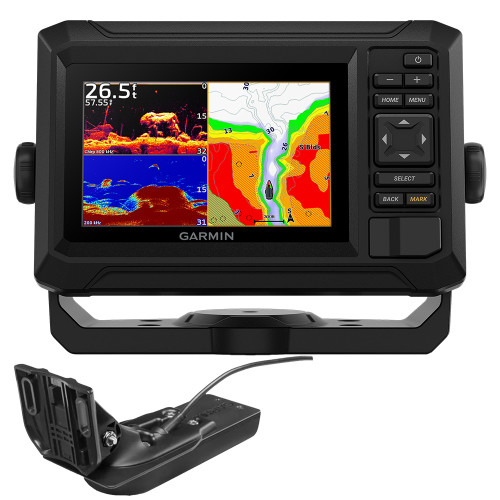
Garmin ECHOMAP UHD2 53cv Chartplotter/Fishfinder Combo, With GT20-TM Transducer, 5 in Keyed Display, CHIRP Traditional Sonar, ClearVü Scanning Sonar, LakeVü g3 Inland Maps, Wi-Fi
Out of stock