


Simrad B60 Bronze Thru-Hull Depth/Temp Transducer, 50/200kHz, 600W, 9-Pin, 10m Cable


-
Perfect Fit, Guaranteed
Get the right part every time
-
Expert Support
Our in-house specialists know our products inside and out
-
Enhanced Value & Service
We go beyond the sale with professional and balanced services
-
Wordwide Delivery
Enjoy hassle-free worldwide delivery
Simrad B60 Bronze Thru-Hull Depth/Temp Transducer, 50/200kHz, 600W, 9-Pin, 10m Cable

Simrad B60 Bronze Thru-Hull Depth/Temp Transducer, 50/200kHz, 600W, 9-Pin, 10m Cable
Overview
The Simrad B60 is a thru-hull depth and water temperature transducer that runs at 50/200 kHz with a 600 W rating, using a 9-pin xSonic connector and a 10 m (33 ft) cable.
It uses a 45° beam at 50 kHz for broader coverage and a 12° beam at 200 kHz when you want more detail. Typical depth performance is up to 366 m (1,200 ft) at 50 kHz and 213 m (700 ft) at 200 kHz.
The housing sits nearly flush with only about 5 mm (3/16 in) outside the hull. It uses a bronze body intended for fiberglass or wood hulls and installs through a 60 mm (2-3/8 in) hole.
Key features
- Conventional 50/200 kHz depth sounding plus water temperature sensing (no speed sensor)
- 600 W rating with a 45° beam at 50 kHz and a 12° beam at 200 kHz
- 9-pin xSonic connector with a 10 m (33 ft) cable
- Low-profile thru-hull shape with about 5 mm (3/16 in) outside the hull
- 60 mm (2-3/8 in) hole size and 68.5 mm (2.70 in) usable shaft length
- Urethane acoustic window at the transducer face
Variants
This transducer is offered with different internal element angles to match common hull deadrise ranges.
The tilt option is the main difference between versions. Each one keeps the same 50/200 kHz, 600 W depth and temperature functions, along with a low-profile bronze thru-hull body, a 9-pin plug, and a 10 m (33 ft) cable.
- 000-16185-001: 0° element angle. Suits flatter mounting areas and hull deadrise from 0° to 7° so the beam stays aimed straight down.
- 000-16186-001: 12° tilted element. Matches hull deadrise from 8° to 15° for a beam that points down when the transducer sits close to flush.
- 000-16188-001: 20° tilted element. Matches hull deadrise from 16° to 24° for deeper V hulls where a straight element would shoot off-angle.
Compatibility and fit
The bronze housing is intended for fiberglass and wood hulls. For aluminum or steel hulls, a stainless steel thru-hull transducer is typically used instead.
Plan for inside access to tighten the retaining nut and route the cable. Confirm the mounting point works with the 68.5 mm (2.70 in) usable shaft length, and that the 60 mm (2-3/8 in) cutout is clear of coring, stringers, and other structure.
Installation and setup
Choose a spot that stays submerged and sees smooth water flow, away from strakes, steps, and fittings that can feed air across the face. With the tilted-element versions, the angle correction is built into the housing, so the body can mount close to flush without an external fairing.
After installation, configure your sonar for a standard 50/200 kHz transducer and verify depth and temperature readings at the dock before heading offshore.
Use cases on board
This is a good match for smaller boats running a conventional sounder for coastal cruising, offshore runs, or fishing over reefs and wrecks. The 50 kHz channel helps when you need broader coverage in deeper water, while 200 kHz is useful for cleaner returns in shallower depths.
Maintenance and care
Keep the transducer face free of growth and heavy paint buildup, and include it in your normal underwater hardware checks for bonding and anode condition. If you apply antifouling, use a transducer-safe coating in thin coats so it does not dampen the signal.
We ship all in-store (FL) stock orders the same day if placed before 3 PM EST, Monday through Friday. Orders placed after this time will ship the next business day. Orders fulfilled from other warehouses or manufacturers may not ship the same day. If an item is out of stock, we will notify you promptly.
Related Products
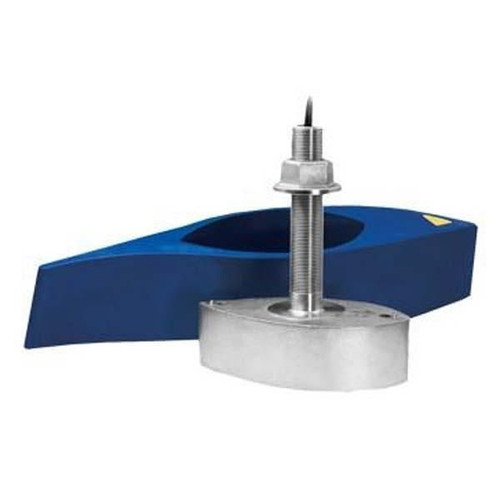
Simrad SS260 Thru-Hull Transducer, 1kW, 50/200kHz, 9-Pin, Depth/Temp
Out of stock

Simrad xSonic Airmar B45 Bronze Thru-Hull Transducer, 9-Pin, 50/200 kHz, 600W, Depth/Temp, With Fairing Block, 10m Cable
Out of stock

Simrad XSONIC Airmar SS75M Thru-Hull Medium CHIRP Depth/Temp Transducer, 600W, 80-130kHz, 9-Pin, 10m Cable

Garmin SS502 Stainless Steel Thru-Hull Depth/Temp Transducer, 8-Pin, 600W, 50/200kHz
Out of stock
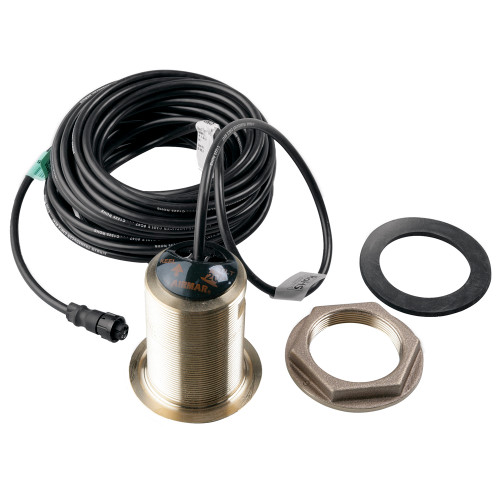
Garmin B60-20 Thru-Hull Transducer, Bronze, 50/200 kHz, 600W, Depth/Temp, 6-Pin
Out of stock