


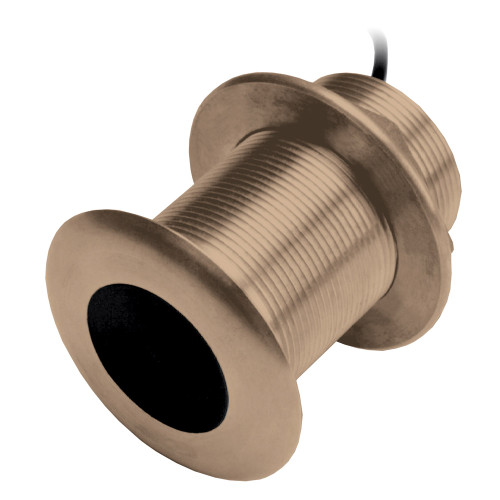
Garmin Airmar B75L Bronze Thru-Hull Transducer, 40-75 kHz, 300W, 8-Pin, 0° Tilt, 0-7° Deadrise, Depth/Temp


-
Perfect Fit, Guaranteed
Get the right part every time
-
Expert Support
Our in-house specialists know our products inside and out
-
Enhanced Value & Service
We go beyond the sale with professional and balanced services
-
Wordwide Delivery
Enjoy hassle-free worldwide delivery
Garmin Airmar B75L Bronze Thru-Hull Transducer, 40-75 kHz, 300W, 8-Pin, 0° Tilt, 0-7° Deadrise, Depth/Temp

Garmin Airmar B75L Bronze Thru-Hull Transducer, 40-75 kHz, 300W, 8-Pin, 0° Tilt, 0-7° Deadrise, Depth/Temp
Overview
The Garmin 010-11635-20 is a bronze thru-hull transducer that runs in the low CHIRP band (40-75 kHz) and outputs 300 W for depth and water-temperature data on compatible Garmin sonar electronics. It uses a 0° tilted element for 0-7° hull deadrise at the install point, with a beamwidth of about 32° to 21° (-3 dB).
The low-profile thru-hull housing sits flush to keep drag down and helps hold bottom at speed when the install location stays in solid water flow. Bronze thru-hulls are typically used on fiberglass and wood hulls; match the housing material to your hull and underwater metals to avoid corrosion issues.
Key features
- Low CHIRP 40-75 kHz band for strong bottom tracking in deeper water
- 300 W power rating
- 0° tilted element fits 0-7° hull deadrise at the mounting surface
- Beamwidth 32° to 21° (-3 dB) for coverage that stays useful as depth changes
- Provides depth and fast-response water-temperature sensing
- Garmin 8-pin connector for compatible Garmin sonar connections
Compatibility and fit
Plan this as a thru-hull installation through solid fiberglass or wood with enough flat area for the mushroom head to sit cleanly. The 0° tilt version is meant for near-flat running surfaces with 0-7° deadrise where it mounts; if the hull angle is steeper at that spot, the beam points off to the side and bottom readings can suffer.
It uses a Garmin 8-pin plug, so confirm your chartplotter, sounder module, or adapter cable is the Garmin 8-pin style before drilling the hull.
Installation and setup
Thru-hull transducers work best when they see water that stays free of bubbles and aeration. Mount it away from steps, strakes, intakes, and other fittings that can feed turbulence, and make sure you have bilge access for tightening and sealing.
Bed the housing with a marine sealant appropriate for below-the-waterline fittings, and re-check the nut and seal after the first few trips once everything has settled.
Electronics and sonar integration
Pair it with a CHIRP-capable Garmin sonar to use the 40-75 kHz band. In traditional sonar modes, the same transducer still supplies depth and temperature information.
Use on board
This is a good match for offshore anglers and cruisers who want low-frequency CHIRP coverage and prefer a flush thru-hull install over a transom mount that can ventilate at speed. It also suits boats that regularly run deeper coastal water where the low band holds bottom better than higher frequencies.
Maintenance and care
Keep marine growth off the face for consistent readings, and avoid hard scraping that can damage the sensing surface. During haul-out, inspect the bedding seal and the bronze body for any weeping or early corrosion so issues are caught before the next season.
We ship all in-store (FL) stock orders the same day if placed before 3 PM EST, Monday through Friday. Orders placed after this time will ship the next business day. Orders fulfilled from other warehouses or manufacturers may not ship the same day. If an item is out of stock, we will notify you promptly.
Related Products

Garmin P319 Depth/Temp Thru-Hull Transducer, 50/200 kHz, 600W, 6-Pin, 0-7 Deg Deadrise
Out of stock

Garmin B164 Tilted Element Thru-Hull Transducer, For 0-7° Deadrise, 1kW, 50/200 kHz, 8-Pin, Low-Profile Bronze Housing, Depth/Temperature
Out of stock

Garmin Airmar B117 Bronze Thru-Hull Transducer, 50/200 kHz, 600W, Depth/Temp, 6-Pin
Out of stock

Garmin B164 Tilted Element Thru-Hull Transducer, 1kW, 50/200 kHz, 20° Tilt, Bronze, 8-Pin, For 16-24° Deadrise, Depth/Temperature
Garmin Airmar B150M Thru-Hull CHIRP Transducer, 300W, 8-Pin, 95-155 kHz, Bronze Housing