


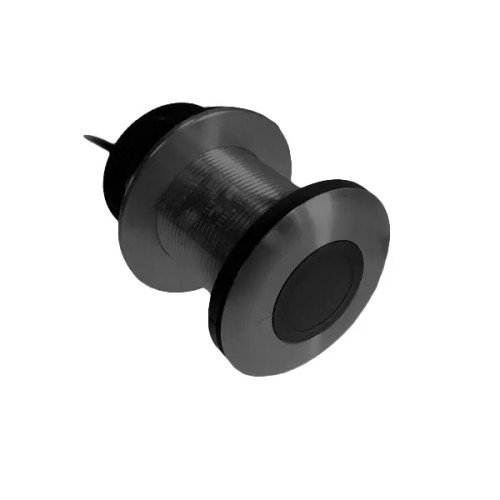
Raymarine P79 Series In-Hull Depth Transducer, 2-22° Deadrise, For Solid Fiberglass Hulls


-
Perfect Fit, Guaranteed
Get the right part every time
-
Expert Support
Our in-house specialists know our products inside and out
-
Enhanced Value & Service
We go beyond the sale with professional and balanced services
-
Wordwide Delivery
Enjoy hassle-free worldwide delivery
Raymarine P79 Series In-Hull Depth Transducer, 2-22° Deadrise, For Solid Fiberglass Hulls

Raymarine P79 Series In-Hull Depth Transducer, 2-22° Deadrise, For Solid Fiberglass Hulls
Overview
The Raymarine P79 Series is an in-hull depth transducer range for boats where a clean bottom profile and no through-hull cutout are important. It mounts inside the hull and sends depth signals through the hull bottom, so there is no external fairing or exposed sensor body in the water.
The P79 installation uses an internal flange bonded to the hull, then filled with propylene glycol non-toxic antifreeze before the transducer cap is locked in place. The adjustable cap lets the beam be set for a straight-down angle on hull deadrise from 2° to 22°. The range is intended for solid fiberglass hulls up to 5/8 in thick and can also be used on aluminum hulls under 3.8 mm, or 0.125 in, thick.
This is a depth-focused transducer family, with configurations for traditional Raymarine instrument systems, 8-pin DSM-style fishfinder sonar modules, and NMEA 2000 or SeaTalkNG networked depth data. As an in-hull transducer, it does not read water temperature.
Key features
- In-hull mounting keeps the outside of the hull smooth, with no hole cut through the bottom for the transducer body.
- Adjustable installation supports hull deadrise from 2° to 22° for better beam alignment.
- Works with solid fiberglass hulls up to 5/8 in thick, with additional use on aluminum hulls under 3.8 mm thick.
- Available connection options cover Raymarine instrument systems, legacy sonar modules, NMEA 2000 networks, and SeaTalkNG integration.
- Liquid-filled base helps couple the sensor to the hull for depth readings without an exposed underwater fitting.
- No water temperature sensor, which is important when replacing a transducer that previously supplied temperature data.
Variants
The P79 Series is offered in several configurations so the transducer can match the electronics already installed on board.
The main differences are the connection type and the included bundle. The in-hull mounting approach, adjustable deadrise setup, and depth-only purpose stay consistent across the range.
- E26001-PZ has push-on 1/8 in female spade connections and a standard bundle. This version suits Raymarine instrument installations that use the traditional spade-style depth transducer wiring.
- E66008 has an 8-pin DSM connection and a standard bundle. This version is set up for Raymarine DSM-style fishfinder and sonar module connections where a dual-frequency 50/200 kHz P79 is required.
- A80373 has a DeviceNet NMEA 2000 connection and a standard bundle. This version sends processed depth data to an NMEA 2000 backbone for use by compatible multifunction displays and instruments.
- T70278 has a DeviceNet NMEA 2000 connection and includes a SeaTalkNG adapter. This version is useful when the vessel uses Raymarine SeaTalkNG cabling and the depth transducer needs to join that network through the included adapter.
Installation and fit
The P79 is installed from inside the boat, so it can be a practical choice when the hull should remain uncut or when an external transducer would add drag, spray, or exposure to trailer bunks and lifting gear. The bonding surface should be a suitable solid area of hull with clean access for alignment and service.
Because the sensor reads through the hull, it is not suitable for cored fiberglass sections unless the installation area has been properly prepared as a solid laminate section. Hull construction matters more with an in-hull transducer than with many external mounts, so confirming hull material and thickness before installation is important.
Electrical and system integration
The spade, DSM, NMEA 2000, and SeaTalkNG configurations serve different onboard systems and should not be treated as interchangeable without checking the display, instrument, or network already on the vessel. The analog instrument version is not the same as the Smart NMEA 2000 version, and the DSM-style fishfinder version is built for sonar modules rather than an instrument backbone.
For owners replacing an older depth transducer, the connection type is usually the first fit check. For new installations, the choice depends on whether depth needs to feed a stand-alone instrument, a sonar module, or a shared marine data network.
Use cases on board
This series is a good match for cruising sailboats, powerboats, RIBs, and fishing boats with suitable hull construction where a flush exterior hull surface is preferred. It is especially useful when bottom tracking is needed without adding a through-hull fitting below the waterline.
We ship all in-store (FL) stock orders the same day if placed before 3 PM EST, Monday through Friday. Orders placed after this time will ship the next business day. Orders fulfilled from other warehouses or manufacturers may not ship the same day. If an item is out of stock, we will notify you promptly.
Related Products

Garmin P79 In-Hull Depth Transducer, NMEA 2000, 235 kHz, 500 ft Depth, 0-22° Deadrise

Garmin P79 Adjustable In-Hull Depth Transducer, 50/200 kHz, 600W, 6-Pin Connector, 0-22° Deadrise
Out of stock

Navico - P79 In-Hull Transducer
Out of stock


Raymarine CPT-S In-Hull CHIRP Transducer, For Non-Cored Fiberglass Hulls, 170-230 kHz, 0-25° Deadrise, 600 ft, 6m Cable
Raymarine DT800 Thru-Hull Depth & Temperature Smart Transducer, SeaTalkng