


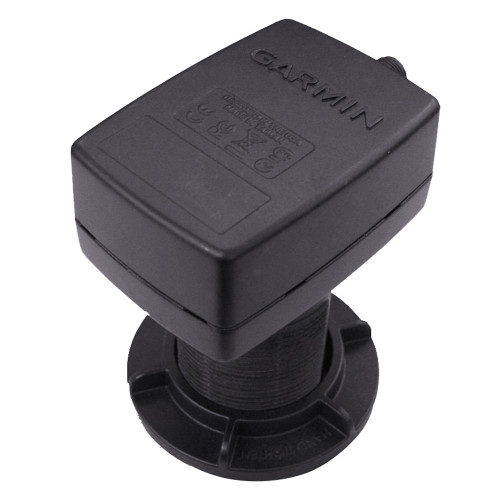
Garmin P79 In-Hull Depth Transducer, NMEA 2000, 235 kHz, 500 ft Depth, 0-22° Deadrise


-
Perfect Fit, Guaranteed
Get the right part every time
-
Expert Support
Our in-house specialists know our products inside and out
-
Enhanced Value & Service
We go beyond the sale with professional and balanced services
-
Wordwide Delivery
Enjoy hassle-free worldwide delivery
Garmin P79 In-Hull Depth Transducer, NMEA 2000, 235 kHz, 500 ft Depth, 0-22° Deadrise

Garmin P79 In-Hull Depth Transducer, NMEA 2000, 235 kHz, 500 ft Depth, 0-22° Deadrise
Overview
The Garmin 010-11394-00 is an in-hull smart transducer that puts depth data onto a NMEA 2000 network for display on compatible instruments. It is a 100 W transducer rated to 500 ft, with a 235 kHz operating frequency and a 6 degree beamwidth, and it supports mounting on hull deadrise angles from 0 to 22 degrees.
Since it mounts inside the hull, there is nothing hanging below the boat and the sensing face stays protected from impact and bottom growth. The key to good readings is picking the right spot in the hull and installing it so the transducer stays level and coupled tightly to the fiberglass.
Key features
- In-hull mount for depth data on a NMEA 2000 network
- 100 W output, rated to 500 ft maximum depth
- 235 kHz operating frequency with a 6 degree beamwidth
- Adjustable mounting supports 0 to 22 degrees of hull deadrise
- Not recommended for cored hulls; maximum fiberglass thickness should be no more than 5/8 inch
- Inside-hull installation keeps the exterior hull smooth with no bottom protrusion
Compatibility and fit
This transducer reads through solid fiberglass. It should be mounted where the laminate is solid and free of core material, flotation, voids, or trapped air and where the fiberglass thickness is no more than 5/8 inch. Confirm the deadrise at the intended location does not exceed 22 degrees.
Choose a spot where the transducer beam will not be blocked by the keel or running gear and where the hull stays in contact with the water while underway. For planing hulls, placement that stays clear of strakes and turbulent water helps keep the depth number steady at speed.
Installation and setup
As with most shoot-through transducers, performance depends heavily on the mounting location. A practical approach is to test a few candidate spots inside the hull and compare readings before bonding the base in place.
Installation uses a bonded base that is filled with propylene glycol as the coupling liquid, then the transducer is locked into the base and adjusted to match deadrise so the beam stays close to vertical. Route cabling so connectors sit above the bilge waterline and keep the transducer cable separated from other wiring where possible to reduce noise.
Network integration
Depth data is carried on the NMEA 2000 backbone, which means it can be shared with compatible displays and instruments already on the network. Plan for an open drop point on the backbone and a correctly powered and terminated NMEA 2000 network so the sensor and the rest of the system stay stable.
Use cases on board
This setup makes sense for boats that want depth on the network without drilling the hull for a thru-hull transducer. It is also a good fit when trailering, beaching, or running in areas where external hardware under the hull is likely to get bumped.
Maintenance and care
Periodically check the installation area for leaks, confirm the housing remains properly filled with coupling liquid, and keep connections dry and supported so the cable is not taking strain. Avoid solvent-based cleaners around the transducer body and face since they can damage plastics.
We ship all in-store (FL) stock orders the same day if placed before 3 PM EST, Monday through Friday. Orders placed after this time will ship the next business day. Orders fulfilled from other warehouses or manufacturers may not ship the same day. If an item is out of stock, we will notify you promptly.
Related Products

Garmin Intelliducer NMEA 2000 Thru-Hull Depth/Temp Transducer, 0-12° Deadrise, 150W, 160 kHz, 900 ft Max Depth
Out of stock

Garmin P79 Adjustable In-Hull Depth Transducer, 50/200 kHz, 600W, 6-Pin Connector, 0-22° Deadrise
Out of stock
Garmin Intelliducer NMEA 2000 Thru-Hull Depth/Temp Transducer, 13-24 Degree Deadrise, 150W RMS, 900 ft Max Depth
Out of stock

Raymarine P79 Series In-Hull Depth Transducer, 2-22° Deadrise, For Solid Fiberglass Hulls

Garmin P79 In-Hull Transducer, Depth Only, 600W, 50/200 kHz, 8-Pin