


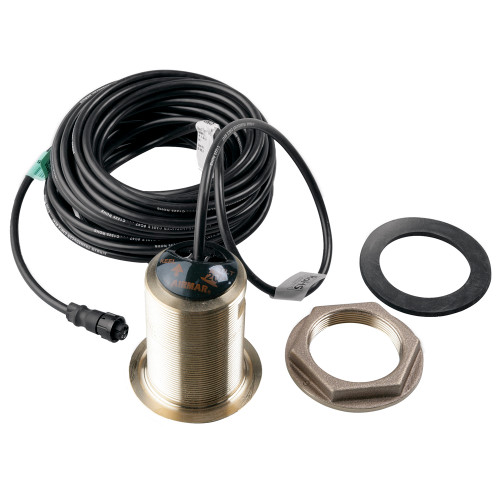
Garmin B60-12 Thru-Hull Transducer, Bronze, 600W, 50/200 kHz, 6-Pin


-
Perfect Fit, Guaranteed
Get the right part every time
-
Expert Support
Our in-house specialists know our products inside and out
-
Enhanced Value & Service
We go beyond the sale with professional and balanced services
-
Wordwide Delivery
Enjoy hassle-free worldwide delivery
Garmin B60-12 Thru-Hull Transducer, Bronze, 600W, 50/200 kHz, 6-Pin

Garmin B60-12 Thru-Hull Transducer, Bronze, 600W, 50/200 kHz, 6-Pin
Overview
The Garmin 010-10982-01 is a B60-12 tilted-element through-hull transducer with a 6-pin connector for compatible Garmin sounders. It runs traditional dual-frequency sonar at 50/200 kHz with 600 W RMS output, and it reports both depth and water temperature.
The ceramic element is fixed at a 12° angle inside the housing so the sonar beam stays aimed closer to vertical on hull sections with deadrise. This version is intended for deadrise angles in the 8° to 15° range, which helps you avoid the added drag and install complexity of a fairing block.
For planning the install, the housing sits nearly flush with about 5 mm (0.19 in) extending below the hull. The cap is roughly 84 mm (3.30 in) in diameter, and the installation calls for a 60 mm (2.375 in) hull cutout.
Key features
- 50/200 kHz traditional dual-frequency sonar with 600 W RMS output
- 12° tilted element to suit 8° to 15° hull deadrise while keeping the beam aimed down
- Bronze through-hull body with a low-profile shape and about 5 mm (0.19 in) protrusion below the hull
- Beamwidths: 45° at 50 kHz and 12° at 200 kHz
- Built-in temperature sensor for water temperature readout
- 60 mm (2.375 in) hull cutout requirement for the thru-hull installation
- 6-pin connector for Garmin sounders that use the 6-pin transducer port
Compatibility and fit
This transducer is meant for installs where the local hull deadrise at the mounting point falls in the 8° to 15° range. It is a 50/200 kHz, 600 W traditional sonar transducer with a Garmin 6-pin connector, so your sounder needs to support those frequencies and that connector style.
Installation and setup
As a thru-hull transducer, installation involves drilling a 60 mm (2.375 in) hole and sealing the housing to the hull with an appropriate marine sealant. Choose a location that stays in clean, aeration-free water underway, and confirm you have adequate inside-hull clearance for the stem, nut, and cable routing. During final alignment, orient the cap so its arrow points toward the keel.
Use cases on board
This style of low-profile, tilted-element transducer is commonly used on center consoles and boats that are trailered, where you want depth and temperature data without a tall fairing block. It is a practical match for coastal cruising, inshore fishing, and general sounder use where 50 kHz is helpful for wider coverage and 200 kHz is helpful for a tighter beam.
Maintenance and care
Keep the face clean for consistent returns, especially after extended time in the water. If antifouling is needed, use a coating intended for transducer faces and apply it carefully so the acoustic window stays smooth and free of buildup.
Safety information
WARNING: This product can expose you to chemicals which are known to the State of California to cause cancer, birth defects, or other reproductive harm. For more information, go to P65Warnings.ca.gov.
We ship all in-store (FL) stock orders the same day if placed before 3 PM EST, Monday through Friday. Orders placed after this time will ship the next business day. Orders fulfilled from other warehouses or manufacturers may not ship the same day. If an item is out of stock, we will notify you promptly.
Related Products
Garmin B60-20 Thru-Hull Transducer, Bronze, 50/200 kHz, 600W, Depth/Temp, 6-Pin
Out of stock

Garmin B60 Tilted Element Thru-Hull Transducer, 600W, 50/200 kHz, Bronze, 8-Pin


Garmin B60-20 Tilted Element Thru-Hull Transducer, 20° Tilt, 50/200 kHz, 600W, Bronze, Garmin 6-Pin
Out of stock

Garmin Airmar B117 Bronze Thru-Hull Transducer, 50/200 kHz, 600W, Depth/Temp, 6-Pin
Out of stock
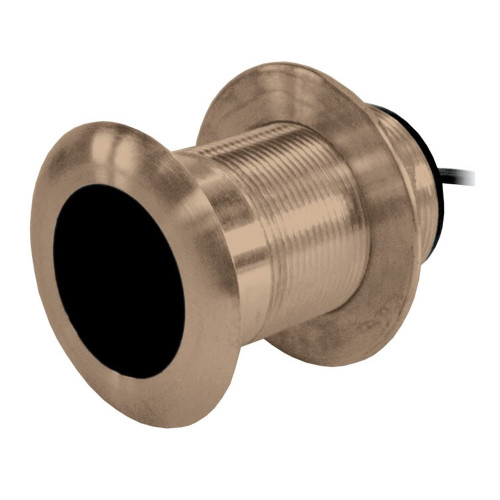
Garmin B117 Bronze Thru-Hull Depth/Temp Transducer, 8-Pin, 600W, 50-200 kHz
Out of stock