


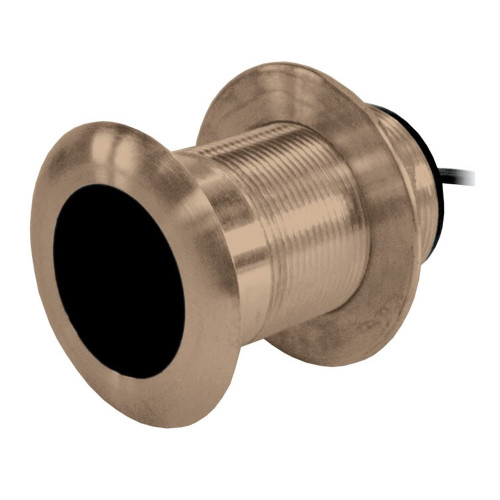
Garmin B117 Bronze Thru-Hull Depth/Temp Transducer, 8-Pin, 600W, 50-200 kHz

-
Perfect Fit, Guaranteed
Get the right part every time
-
Expert Support
Our in-house specialists know our products inside and out
-
Enhanced Value & Service
We go beyond the sale with professional and balanced services
-
Wordwide Delivery
Enjoy hassle-free worldwide delivery
Garmin B117 Bronze Thru-Hull Depth/Temp Transducer, 8-Pin, 600W, 50-200 kHz

Garmin B117 Bronze Thru-Hull Depth/Temp Transducer, 8-Pin, 600W, 50-200 kHz
Overview
The Garmin 010-10182-21 is a bronze thru-hull depth and water-temperature transducer with an 8-pin connector for traditional 50/200 kHz sonar. It is a 600 W unit with a 45-degree beam at 50 kHz and a 12-degree beam at 200 kHz, and it is specified for depth performance from 800 to 1,200 ft.
It uses a low-profile housing that extends about 5 mm (3/16 in.) outside the hull and is intended for fiberglass and wood hulls. The mounting location should have 0 to 7 degrees of deadrise, and installation requires a 2 in (51 mm) thru-hull hole; it should not be used on metal hulls.
Key features
- Traditional dual-frequency sonar: 50/200 kHz at 600 W for depth with water-temperature sensing
- Beam coverage options: 45-degree beam at 50 kHz and 12-degree beam at 200 kHz
- Low-profile bronze housing with about 5 mm (3/16 in.) extending outside the hull to keep drag down at speed
- Intended for fiberglass and wood hulls; not suitable for metal hull installations
- Fits 0 to 7 degrees of deadrise at the mounting location
- Requires a 2 in (51 mm) thru-hull hole and inside access for the retaining nut and cable routing
- 8-pin connection with an attached 39 ft cable for routing to the sounder or sonar module
- Depth and temperature only, with no speed sensor
Compatibility and fit
This transducer connects to Garmin sonar equipment that accepts an 8-pin traditional transducer plug. If the sounder has a 6-pin transducer port, an adapter cable is required for connection.
Because it is a 0-degree, low-profile thru-hull style, confirm the deadrise angle at the planned mounting spot is within the 0 to 7 degree range. Plan for a 2 in (51 mm) hull penetration and enough clearance on the inside to tighten the hardware and route the cable without sharp bends.
Installation and setup
Thru-hull transducers need a clean-water location for consistent readings, so pick a spot that stays submerged and avoids turbulent flow from strakes, steps, intakes, and other thru-hulls. Route the cable away from ignition wiring and high-current runs where possible, and leave a service loop so connections are not strained.
Use proper marine sealing practices for the hull penetration and recheck the retaining nut after the first few outings, especially on boats that see heavy vibration or frequent trailering.
Use on board
This is a straightforward match for boats that want dependable bottom tracking and water temperature while running at speed, including coastal cruising and fishing setups using traditional 50/200 kHz sonar. It fits well when you have room for a thru-hull install and want the low-profile exterior shape that keeps drag and snag risk down.
Maintenance and care
Keep the face of the transducer free of marine growth for accurate depth and temperature readings. During routine bottom checks, inspect the outside surface for fouling and confirm the inside hardware and bedding remain secure and dry.
We ship all in-store (FL) stock orders the same day if placed before 3 PM EST, Monday through Friday. Orders placed after this time will ship the next business day. Orders fulfilled from other warehouses or manufacturers may not ship the same day. If an item is out of stock, we will notify you promptly.
Related Products

Garmin Airmar B117 Bronze Thru-Hull Transducer, 50/200 kHz, 600W, Depth/Temp, 6-Pin
Out of stock
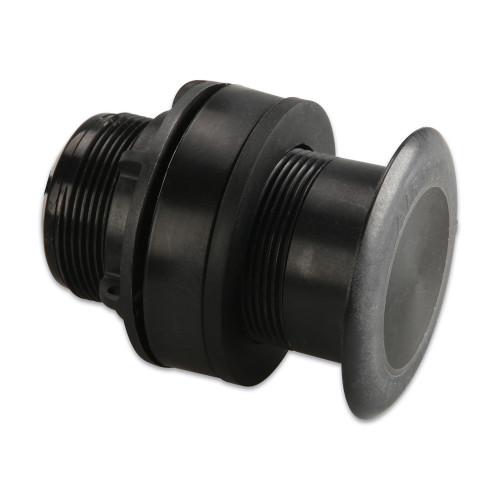
Garmin P319 Plastic Thru-Hull Depth/Temp Transducer, 8-Pin, 600W 50/200 kHz
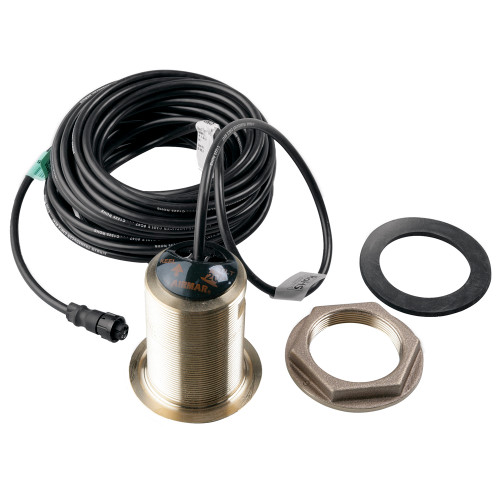
Garmin B60-20 Thru-Hull Transducer, Bronze, 50/200 kHz, 600W, Depth/Temp, 6-Pin
Out of stock

Garmin B258 Bronze Thru-Hull Depth/Temp Transducer, 1kW, 50/200 kHz, 8-Pin
Out of stock

Garmin P79 In-Hull Transducer, Depth Only, 600W, 50/200 kHz, 8-Pin