


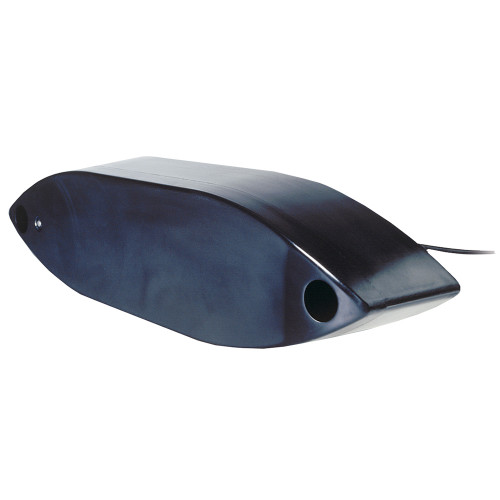
Simrad xSonic B275LH-W Bronze Thru-Hull CHIRP Transducer, 42-65 kHz Low, 150-250 kHz High, 1 kW, 25° Wide Beam, 9-Pin, With Fairing Block


-
Perfect Fit, Guaranteed
Get the right part every time
-
Expert Support
Our in-house specialists know our products inside and out
-
Enhanced Value & Service
We go beyond the sale with professional and balanced services
-
Wordwide Delivery
Enjoy hassle-free worldwide delivery
Simrad xSonic B275LH-W Bronze Thru-Hull CHIRP Transducer, 42-65 kHz Low, 150-250 kHz High, 1 kW, 25° Wide Beam, 9-Pin, With Fairing Block

Simrad xSonic B275LH-W Bronze Thru-Hull CHIRP Transducer, 42-65 kHz Low, 150-250 kHz High, 1 kW, 25° Wide Beam, 9-Pin, With Fairing Block
Overview
The Simrad 000-13771-001 is a CHIRP transducer in a bronze thru-hull housing with a 9-pin connector, covering 42-65 kHz (low) and 150-250 kHz (high-wide) at 1 kW. The high-wide channel holds a constant 25° beam across its band, which is useful when you want broad coverage in the upper water column and consistent detail in shallower depths.
It reads depth and water temperature, and it installs with a fairing block that helps smooth water flow across the face when you are running. Installation calls for a 30 mm (1-3/16") hole, and the fairing supports hull deadrise up to 20° when it is fitted and aligned correctly.
Key features
- Dual-channel CHIRP coverage: 42-65 kHz low band and 150-250 kHz high-wide band
- 1 kW power rating for strong low-band performance when holding bottom in deeper water
- Constant 25° beam on the 150-250 kHz channel; low-band beamwidth ranges from 25° to 16°
- Depth rating: up to 914 m (3000') on low CHIRP and up to 152 m (500') on high-wide CHIRP
- Bronze housing with a urethane acoustic window
- Thru-hull mount with fairing; 30 mm (1-3/16") hole size and 121 mm (4.75") usable shaft length
- 114 x 216 x 244 mm (4.5 x 8.5 x 9.6 in) body size without fairing; 7.3 kg (16 lb) unit weight
- 10 m (33 ft) cable with 9-pin connection
What's included
- Thru-hull transducer with attached 10 m (33 ft) cable and 9-pin connector
- Fairing block
Installation and setup
This is a true thru-hull install, so plan on inside access for tightening, sealing, and cable routing. The fairing block is shaped during installation to match the hull angle and keep the transducer face presented cleanly to the water flow.
Use standard thru-hull practices for cored hulls, bedding, and torque so the seal stays watertight through temperature swings and hull flex. Once installed, route the cable away from ignition wiring, high-current DC runs, and other noise sources to keep the sounder picture clean.
Compatibility and fit
The sonar side needs a CHIRP-capable sounder (built-in or black box) that supports dual-band low and high CHIRP at 1 kW, plus a matching 9-pin sonar port. If your system uses a different connector style, plan for the correct adapter rather than cutting and re-terminating the cable.
On the hull side, check that you have enough internal clearance for the stem and nut, plus room for the fairing footprint. Bronze thru-hulls are common on saltwater boats, but bonding and corrosion control should be handled the same way you would for any other underwater bronze fitting on your vessel.
Use cases on board
This transducer suits boats that split time between deeper water work and shallower hunting, where you still want a wide look under the boat on the high band. Offshore anglers, commercial operators, and anyone running bigger hulls that need consistent bottom tracking at speed are a good match for this style of thru-hull install.
Maintenance and care
Keep the transducer face clean for the best returns, especially if the boat lives in the water. If you apply bottom paint, use coatings meant for transducers and avoid buildup on the acoustic window.
We ship all in-store (FL) stock orders the same day if placed before 3 PM EST, Monday through Friday. Orders placed after this time will ship the next business day. Orders fulfilled from other warehouses or manufacturers may not ship the same day. If an item is out of stock, we will notify you promptly.
Related Products

Raymarine B275LH-W Thru-Hull CHIRP Transducer, 1kW, 42-65/150-250 kHz, 25° Beam, Bronze, Fairing Block
Out of stock

Garmin B275LH-W Bronze Thru-Hull CHIRP Transducer, 1 kW, 42-65/150-250 kHz, 25° Wide Beam, 12-Pin, Temp Sensor, With Fairing

Simrad R509LH-W Thru-Hull Low/High CHIRP Transducer, 2-3 kW, 28-60/150-250 kHz, 25 Deg High-Wide Beam, Depth/Temp Sensor, Fairing Block
Out of stock

Simrad XSONIC TM275LH-W Transom-Mount CHIRP Transducer, 1 kW, 42-65/150-250 kHz, Wide Beam 25°, Dual 9-Pin Connectors, 10 m Cable, Temperature Sensor
Garmin Airmar 509LHW Thru-Hull Transducer, 3 kW, CHIRP Low 28-60 kHz, CHIRP High Wide 150-250 kHz, Temperature Sensor, Bare Wire
Out of stock