


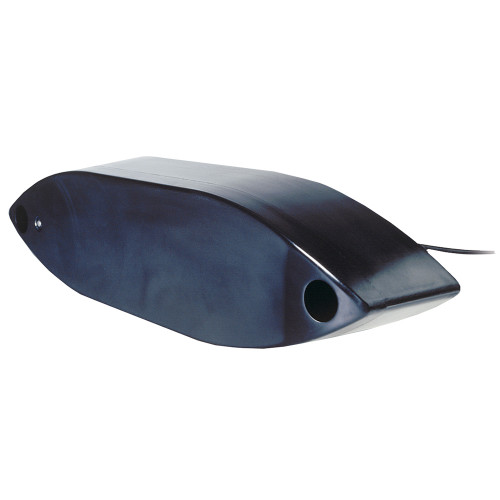
Simrad R509LH-W Thru-Hull Low/High CHIRP Transducer, 2-3 kW, 28-60/150-250 kHz, 25 Deg High-Wide Beam, Depth/Temp Sensor, Fairing Block


-
Perfect Fit, Guaranteed
Get the right part every time
-
Expert Support
Our in-house specialists know our products inside and out
-
Enhanced Value & Service
We go beyond the sale with professional and balanced services
-
Wordwide Delivery
Enjoy hassle-free worldwide delivery
Simrad R509LH-W Thru-Hull Low/High CHIRP Transducer, 2-3 kW, 28-60/150-250 kHz, 25 Deg High-Wide Beam, Depth/Temp Sensor, Fairing Block

Simrad R509LH-W Thru-Hull Low/High CHIRP Transducer, 2-3 kW, 28-60/150-250 kHz, 25 Deg High-Wide Beam, Depth/Temp Sensor, Fairing Block
Overview
The Simrad 000-13773-001 is a thru-hull wide-beam CHIRP transducer with a fairing block for boats that want low and high-band sonar from one installation. It CHIRPs across 28 to 60 kHz on the low band and 150 to 250 kHz on the high band, with the high-wide element holding a constant 25° beam. Low-band depth capability is listed up to 3048 m (10,000 ft), while the high-wide band is suited to shallower work down to 152 m (500 ft) with broad coverage under the boat.
This is an external-mount thru-hull style transducer with a urethane housing and an epoxy/urethane acoustic window, and it is specified as compatible with all hull materials. It includes depth and fast-response water-temperature sensing, and the mounting geometry supports a maximum deadrise angle of 22°. Physical size is 170 x 587 x 114 mm, and the unit weighs 20.8 kg (46 lb), so it is typically planned into the build or installed where there is good interior access.
Key features
- Dual-band CHIRP operation: 28 to 60 kHz (low) and 150 to 250 kHz (high-wide).
- Constant 25° beam on the 150 to 250 kHz band for wide coverage in the upper water column.
- Maximum depth ratings: up to 3048 m (10,000 ft) on the low band, and up to 152 m (500 ft) on the high-wide band.
- Depth plus fast-response water-temperature sensing in the same thru-hull.
- Thru-hull, external-mount installation with fairing block; maximum deadrise angle 22°.
- Urethane housing with epoxy/urethane acoustic window; specified as compatible with all hull materials.
- Dimensions: 170 x 587 x 114 mm; weight: 20.8 kg (46 lb).
Compatibility and fit
This transducer is meant for a CHIRP sounder setup that supports both low and high channels and is able to drive a 2 to 3 kW class transducer. It is specified for use with the S5100 high performance sounder module. For clean performance, confirm your sonar module and transducer interface match the channel requirements and power class before committing to the hull cutout.
Installation and setup
Plan this as a true thru-hull install: the fairing block is used to match the hull angle so the acoustic face runs correctly in the water, and the listed maximum deadrise is 22°. Because of the unit size and weight, allow room inside the hull for the stuffing tube and hardware, and route the cable where it will not be pinched or sit in bilge water. On a boat that sees speed and chop, keeping the transducer in clean, non-aerated water is as important as the electrical hookup.
Use cases on board
The low band is aimed at deep-water bottom tracking, while the high-wide band is used for wide, detailed coverage closer to the surface where bait and fish can be missed by narrower beams. This is a common match for offshore and coastal fishing boats that want one thru-hull to cover both deep drops and day-to-day sounding, and for crews running higher-end sonar systems on larger vessels.
Maintenance and care
Keep the face clean for consistent returns, especially if the boat lives in the water. Check the thru-hull bedding and hardware during haul-outs, and inspect the cable run for chafe where it passes bulkheads or enters rigging conduits. If you use anti-fouling near the transducer, keep coatings off the acoustic face unless the product is specifically intended for transducer use.
We ship all in-store (FL) stock orders the same day if placed before 3 PM EST, Monday through Friday. Orders placed after this time will ship the next business day. Orders fulfilled from other warehouses or manufacturers may not ship the same day. If an item is out of stock, we will notify you promptly.
Related Products

Simrad xSonic B275LH-W Bronze Thru-Hull CHIRP Transducer, 42-65 kHz Low, 150-250 kHz High, 1 kW, 25° Wide Beam, 9-Pin, With Fairing Block
Garmin Airmar 509LHW Thru-Hull Transducer, 3 kW, CHIRP Low 28-60 kHz, CHIRP High Wide 150-250 kHz, Temperature Sensor, Bare Wire
Out of stock

Garmin B275LH-W Bronze Thru-Hull CHIRP Transducer, 1 kW, 42-65/150-250 kHz, 25° Wide Beam, 12-Pin, Temp Sensor, With Fairing

Raymarine B275LH-W Thru-Hull CHIRP Transducer, 1kW, 42-65/150-250 kHz, 25° Beam, Bronze, Fairing Block
Out of stock

Airmar - R509C-LHW Low/High-Wide Chirp 3KW Thru-Hull Mount Depth/Temp Transducer
Out of stock