


Garmin GFS 10 Fuel Flow Sensor, For Gasoline Engines, NMEA 2000/CANet, 3/8 in, 2-50 GPH, Fuel Level Sensing


-
Perfect Fit, Guaranteed
Get the right part every time
-
Expert Support
Our in-house specialists know our products inside and out
-
Enhanced Value & Service
We go beyond the sale with professional and balanced services
-
Wordwide Delivery
Enjoy hassle-free worldwide delivery
Garmin GFS 10 Fuel Flow Sensor, For Gasoline Engines, NMEA 2000/CANet, 3/8 in, 2-50 GPH, Fuel Level Sensing

Garmin GFS 10 Fuel Flow Sensor, For Gasoline Engines, NMEA 2000/CANet, 3/8 in, 2-50 GPH, Fuel Level Sensing
Overview
The Garmin 010-00671-00 is an in-line fuel sensor that tracks gasoline fuel flow and can also read tank level when wired to an existing fuel gauge or resistive tank level sender. It communicates with compatible displays over NMEA 2000 or Garmin CANet and supports flow rates from 2 to 50 gal/hr (7.5 to 190 L/h).
This sensor installs into a 3/8 in. (9.5 mm) fuel hose and should be mounted to the boat, not directly on the engine. It runs on 10 to 22 Vdc, uses a 0.25 A fuse, and has a unit size of 2 1/8 in. (54 mm) W x 3 21/32 in. (93 mm) H x 1 1/4 in. (32 mm) D.
Key features
- Outputs fuel flow and fuel-used data to compatible chartplotters and instruments via NMEA 2000 or Garmin CANet.
- Optional fuel level input from an existing fuel gauge circuit or tank level sensor for on-screen tank level information.
- Works in 3/8 in. (9.5 mm) fuel hose runs, with 2 to 50 gal/hr (7.5 to 190 L/h) operating flow range.
- Single-line fuel system use; not for installations where fuel returns to the tank through a return line.
- 10 to 22 Vdc power requirement with a 0.25 A fuse and NMEA 2000 LEN of 1 for network planning.
- Installation guidance that helps reduce air-bubble errors, including mounting so fuel flows upward through the sensor and following the flow-direction arrow.
What’s included
- GFS 10 fuel sensor unit
- 4 reusable stainless-steel hose clamps
- 3/8 in. in-line fuel filter
- Mounting hardware
- CANet adapter
- NMEA 2000 T-connector
- Installation instructions
Compatibility and fit
This sensor is for gasoline-engine fuel systems and is not for diesel fuel systems. It is intended for single-line fuel systems; do not install it on engines that have a return line back to the fuel tank. Fuels with more than 10% ethanol (such as E85) are not supported.
On pressurized fuel-injected systems, the sensor must be installed on the low-pressure side of the high-pressure fuel pump. Systems with large engine-mounted fuel reservoirs can cause erratic flow readings, so it is a better match for typical marine setups that feed the engine without a large reservoir between the sensor and the engine.
Installation and setup
Plan the install location so the sensor sits as far from the engine as practical and is not exposed to excess heat or vibration. Avoid placing it between the engine and the priming bulb (when a priming bulb is used). Install it above the maximum fuel level of the tank and mount the sensor and filter to a solid structure so the fuel hose is supported and does not hang on the fittings.
Follow the flow arrow on the housing and mount the sensor so fuel flows upward through it to help prevent air-bubble related errors. Keep a clean, dry work area, drain the hose where possible, and check the installation for leaks periodically.
Electrical and network integration
Power is supplied through the bare-wire power/data cable and should be protected by a 0.25 A fuse installed close to the battery. The unit draws up to 0.5 W. If you choose to connect tank level, it can be wired into the existing fuel gauge circuit or to the tank level sensor where applicable.
For data, connect through NMEA 2000 using the included T-connector and the built-in NMEA 2000 drop cable (6 ft / 1.8 m). The power/data cable is 25 ft (7.6 m) to help reach typical helm or distribution locations, and the sensor can also connect via Garmin CANet using the included adapter when that network is used onboard.
Use cases on board
This is a practical add-on when you want fuel burn and fuel-used information visible at the helm, especially on boats where range planning matters on longer runs. It fits well on single-outboard, twin-outboard, and inboard gasoline setups where the fuel line routing allows the sensor and filter to be mounted securely away from engine heat and vibration.
Maintenance and care
Inspect hose clamps, filter connections, and mounting points regularly, especially after the first few outings and after winter layup. Replace the in-line fuel filter at the start of each season or about every 2,600 gallons (10,000 L), and re-check for seepage whenever the fuel system has been serviced.
We ship all in-store (FL) stock orders the same day if placed before 3 PM EST, Monday through Friday. Orders placed after this time will ship the next business day. Orders fulfilled from other warehouses or manufacturers may not ship the same day. If an item is out of stock, we will notify you promptly.
Related Products

Garmin Heading Sensor, NMEA 2000/NMEA 0183, 3-Axis Compass, IPX6
Out of stock

Maretron - M1AR Fuel Flow Sensor 0.53 To 26.4 GPH

Maretron - M2AR Fuel Flow Sensor 6.6 To 132 GPH

Garmin GFL 10 NMEA 2000 Fluid Level Analog Adapter, IPX7, Includes NMEA 2000 T-Connector
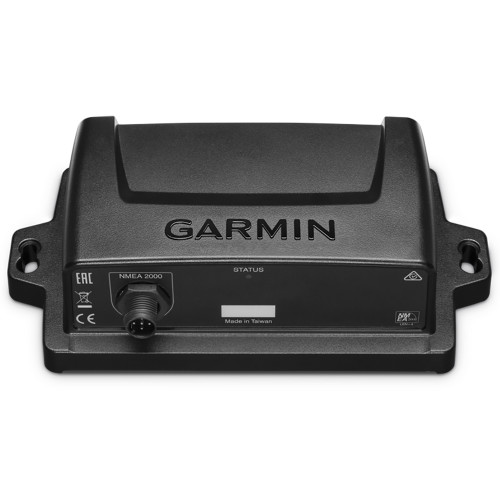

Garmin 9-Axis Heading Sensor, NMEA 2000, ±2° Accuracy, 10 Hz Output
Out of stock