


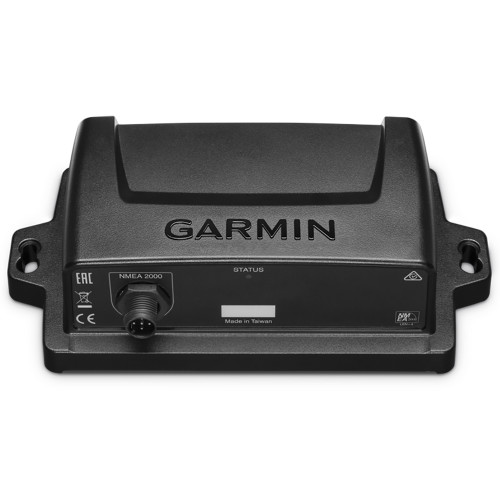
Garmin Heading Sensor, NMEA 2000/NMEA 0183, 3-Axis Compass, IPX6


-
Perfect Fit, Guaranteed
Get the right part every time
-
Expert Support
Our in-house specialists know our products inside and out
-
Enhanced Value & Service
We go beyond the sale with professional and balanced services
-
Wordwide Delivery
Enjoy hassle-free worldwide delivery
Garmin Heading Sensor, NMEA 2000/NMEA 0183, 3-Axis Compass, IPX6

Garmin Heading Sensor, NMEA 2000/NMEA 0183, 3-Axis Compass, IPX6
Overview
The Garmin 010-11417-00 is a 3-axis heading sensor that outputs heading data over NMEA 0183 or NMEA 2000 for accurate radar overlay and MARPA functions on compatible systems. It uses a solid-state compass with an integrated accelerometer and rate gyro, delivering better than 1 degree static heading accuracy and 2 degrees dynamic accuracy with up to 30 degrees of pitch and roll.
It runs on 9 to 16 VDC and comes in an IPX6-rated housing for wet helm areas and washdowns. Physical size is about 2 in high by 4.4 in long by 4.5 in deep, which helps when space is tight inside a console or under a dash.
Key features
- Better than 1 degree static heading accuracy; 2 degrees dynamic accuracy with up to 30 degrees of pitch and roll
- Heading output is 10 Hz by default on both NMEA 0183 and NMEA 2000; NMEA 2000 output can be up to 20 Hz
- NMEA 0183 and NMEA 2000 data output support to fit different network and wiring setups
- Three-axis solid-state compass plus accelerometer and rate gyro for stable heading data when the boat is moving
- IPX6-rated waterproof housing for spray and deck wash conditions
- Mounts on an angled bulkhead and supports auto-calibration for a shorter setup process
Installation and setup
Mount the sensor on a solid surface where it will not be kicked or used as a handhold. Like any compass-based sensor, it needs some distance from magnetic sources such as speakers, large DC motors, or high-current wiring runs.
The enclosure can be mounted on an angled bulkhead, which helps when the best location is under a console or inside a helm station. After mounting and wiring, complete the calibration steps on the connected display so the heading aligns correctly with the boat.
Electrical and data output
Power range is 9 to 16 VDC. Data output can be set up on either NMEA 0183 wiring or a NMEA 2000 backbone, depending on how the rest of the electronics are networked.
NMEA 0183 and NMEA 2000 cables are sold separately, so plan the correct cable type for your existing system before installation.
Compatibility and fit
This sensor is used when a vessel needs consistent heading input for features like radar overlay and MARPA tracking. Confirm that your display, radar, or other onboard electronics accept heading input via NMEA 0183 or NMEA 2000 and that the installation location can stay clear of magnetic interference.
Use cases on board
A good match for helms that rely on radar overlay, MARPA target tracking, or any setup where heading needs to stay steady during turns, chop, and acceleration. It also fits well on boats that see frequent pitch and roll, since the rate gyro helps maintain heading accuracy under dynamic motion.
Maintenance and care
Periodically check that the mounting hardware stays tight and that the cable routing is supported so vibration does not work the connections loose over time. If electronics are moved near the sensor later, re-check heading alignment since magnetic changes onboard can affect compass-based devices.
We ship all in-store (FL) stock orders the same day if placed before 3 PM EST, Monday through Friday. Orders placed after this time will ship the next business day. Orders fulfilled from other warehouses or manufacturers may not ship the same day. If an item is out of stock, we will notify you promptly.
Related Products

Garmin 9-Axis Heading Sensor, NMEA 2000, ±2° Accuracy, 10 Hz Output
Out of stock

Garmin Marine Heading Sensor Cable, NMEA 2000, 6 m
Out of stock

Garmin Marine Heading Sensor Cable, NMEA 0183, 32.8 ft (10 m)
Out of stock

Furuno - SCX21 Satellite Compass - NMEA 0183

Garmin GPSMAP Keyed Networking Chartplotter, Garmin Marine Network, NMEA 2000, NMEA 0183, 10 Hz GPS/GLONASS, Wi-Fi, IPX7