


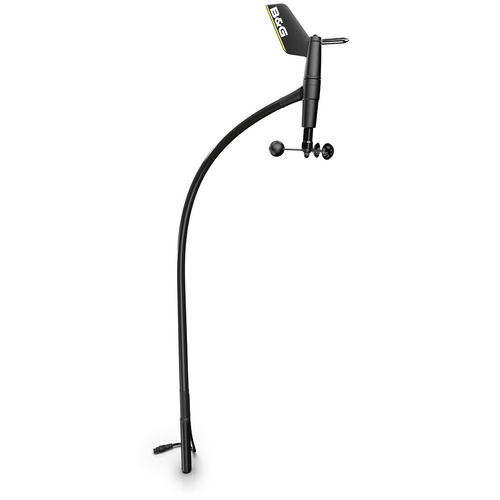
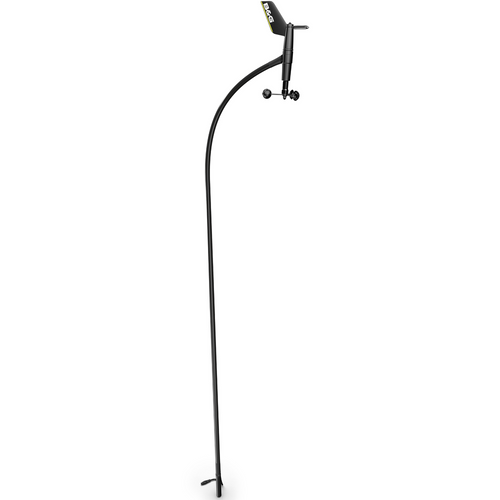
B&G WS700 Series Vertical Wind Sensor, For H5000 & WTP3, Carbon Spar




-
Perfect Fit, Guaranteed
Get the right part every time
-
Expert Support
Our in-house specialists know our products inside and out
-
Enhanced Value & Service
We go beyond the sale with professional and balanced services
-
Wordwide Delivery
Enjoy hassle-free worldwide delivery
B&G WS700 Series Vertical Wind Sensor, For H5000 & WTP3, Carbon Spar

B&G WS700 Series Vertical Wind Sensor, For H5000 & WTP3, Carbon Spar
Overview
The B&G WS700 series is a masthead wind sensor range that reports apparent wind angle and wind speed for sailing instruments, tactical processors, and autopilots. Depending on configuration, the vertical carbon spar is offered from 0.8 m up to 1.8 m so the vane sits in cleaner air above the sail plan.
Across the range, wind is measured from 0.5 to 90 knots, with wind angle accuracy of +/- 0.5° and wind speed accuracy of +/- 0.2 knots (2 to 80 knots). The sensor outputs NMEA 0183 MWV,R at 10 Hz and runs from a 12 V DC nominal supply (9 to 16 V DC).
This unit is built for the masthead environment with an IPX6 water-resistance rating and low current draw (15 mA at 12 V, under 0.2 W). If you are replacing an older vertical masthead unit, the physical mounting matches the VHMU-style footprint, which can simplify upgrades when the bracket arrangement is already in place.
Key features
- Vertical high-modulus carbon spar options (0.8 m to 1.8 m) to lift the vane above sail-plan turbulence at the masthead.
- Wind range 0.5 to 90 knots, with wind angle accuracy of +/- 0.5° and wind speed accuracy of +/- 0.2 knots (2 to 80 knots).
- NMEA 0183 output (MWV,R at 10 Hz); can be brought onto an NMEA 2000 network with an optional interface.
- Single mast cable approach with cable length options of 20 m, 35 m, 50 m, or 80 m for different masts and routing paths.
- IPX6 water resistance for spray and washdowns at the masthead.
- Low power draw: 15 mA at 12 V (under 0.2 W) on a 12 V DC nominal supply (9 to 16 V DC).
- Mast-top and mast-face mounting options are supported; Ocean specification versions use a custom bracket when a mast-face mount is required.
Variants
Configurations vary by spar length, pack type, and specification. Spar lengths in this range include 0.8 m, 1.1 m, 1.4 m, and 1.8 m, so you can match the sensor height to your rig and how much you want to clear the sails and masthead gear.
Pack options include Wind Pack and Sensor Only. Wind Pack configurations include a 35 m mast cable and a junction box for a tidy mast-base connection, while Sensor Only configurations supply the sensor without the mast cable and junction box. Standard and Ocean specification versions are available, with Ocean specification models using an Ocean spec carbon spar and different bracket requirements for mast-face mounting.
Compatibility and system integration
The sensor outputs wind data over NMEA 0183 (MWV,R at 10 Hz). It can be wired into compatible B&G systems such as H5000 or WTP3 through an NMEA 0183 input, or bridged onto an NMEA 2000 backbone using an optional wired interface.
For NMEA 0183 connections, the serial port settings are 38400 baud, 8 data bits, no parity, 1 stop bit. Power is 12 V DC nominal (9 to 16 V DC), supplied via the interface or a separate feed depending on your system layout.
Installation and setup
Mounting is typically done at the masthead with a mast-top or mast-face bracket. The spar should be aligned with the boat centerline and oriented forward so the sensor reports correct angles.
Plan the mast cable run before stepping the mast, and protect the cable at exit points to prevent chafe. Wind Pack configurations use a junction box at the mast base to transition from the mast cable to the rest of the instrument wiring; Sensor Only configurations will require you to provide a compatible mast cable and junction arrangement.
If you are selecting an Ocean specification sensor, account for bracket requirements at the masthead. Mast-face mounting uses a custom bracket on those versions.
Use cases on board
Accurate wind at the masthead matters most when you are steering to a target angle under autopilot, tuning sails for racing, or using true wind calculations for offshore routing. The range of spar heights helps on boats with large mainsails, code sails, or masthead hardware where getting the vane into clean airflow is the priority.
This is a good fit for performance cruisers, race boats, and offshore setups that already rely on NMEA 0183 or NMEA 2000 instruments and want wind data that holds steady when the sea state and apparent wind angle are changing quickly.
Maintenance and care
Rinse salt and grime off the sensor during routine washdowns, and inspect the vane and cups for free movement. During seasonal checks, look over the mast cable for chafe and make sure junction box connections stay dry and strain-relieved.
We ship all in-store (FL) stock orders the same day if placed before 3 PM EST, Monday through Friday. Orders placed after this time will ship the next business day. Orders fulfilled from other warehouses or manufacturers may not ship the same day. If an item is out of stock, we will notify you promptly.
Related Products
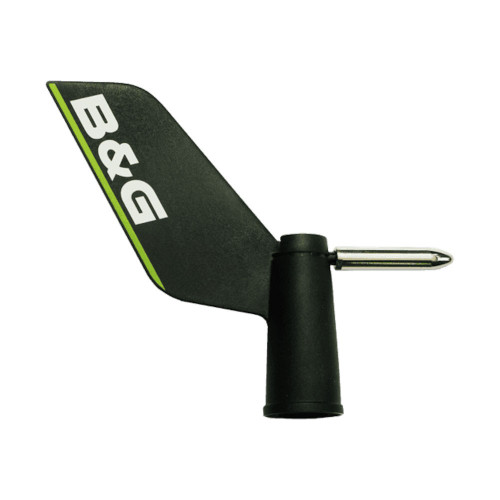
B&G Wind Vane Assembly, For WS300/WS700 Wind Sensors
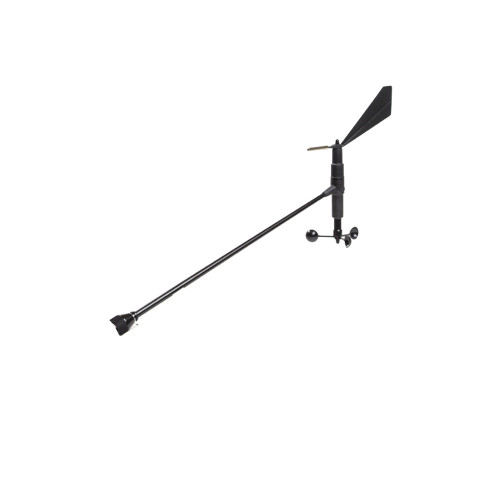
B&G 213 Masthead Wind Sensor, For H5000/H3000, Pulse/Analogue Output

B&G WS300 Mast Cable, For WS310/WS700 Wind Sensors, Pre-Molded Connectors


B&G Wind Speed Bearing, Fits WS310/WS320/WS700 and 508/608/213/496 Sensors
Out of stock
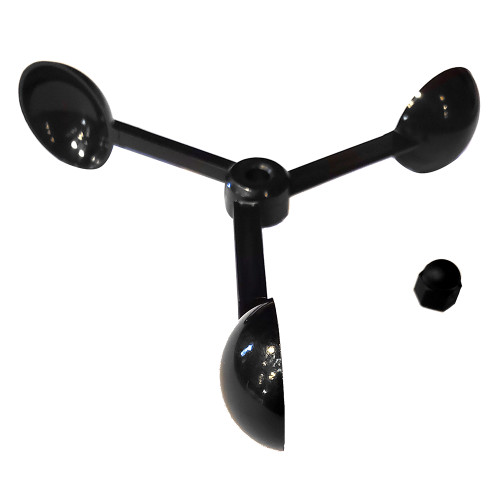
B&G Wind Speed Cups, For All B&G Wind Sensors, With Mounting Nut