


Garmin B258 Bronze Thru-Hull Depth/Temp Transducer, 1kW, 50/200 kHz, 8-Pin


-
Perfect Fit, Guaranteed
Get the right part every time
-
Expert Support
Our in-house specialists know our products inside and out
-
Enhanced Value & Service
We go beyond the sale with professional and balanced services
-
Wordwide Delivery
Enjoy hassle-free worldwide delivery
Garmin B258 Bronze Thru-Hull Depth/Temp Transducer, 1kW, 50/200 kHz, 8-Pin

Garmin B258 Bronze Thru-Hull Depth/Temp Transducer, 1kW, 50/200 kHz, 8-Pin
Overview
The Garmin 010-10703-20 is a B258 1 kW bronze thru-hull depth and temperature transducer with an 8-pin plug and a fairing block for hull deadrise up to 26 degrees. It operates at 50/200 kHz, uses a 39 ft cable, and has beamwidths of 14 x 23 degrees at 50 kHz and 3 x 5 degrees at 200 kHz. Maximum depth range is listed at 1,500 to 2,200 ft depending on conditions and frequency selection.
This is a traditional dual-frequency transducer meant for boats that want a thru-hull install for consistent readings and a clean bottom profile. The fairing block is there to correct the transducer angle on a V-hull so the face sits properly in the water when the boat is running.
Key features
- Traditional 1 kW 50/200 kHz sonar with depth and water temperature
- 8-pin transducer plug with a 39 ft cable
- Beamwidths: 14 x 23 degrees at 50 kHz and 3 x 5 degrees at 200 kHz
- Fairing block supports 0 to 26 degrees of deadrise for a proper through-hull aiming angle
- Thru-hull stem hole size is 30 mm (1-3/16 in.) with a usable shaft length of 121 mm (4.75 in.)
- Maximum depth range listed at 1,500 to 2,200 ft (conditions and installation affect results)
Compatibility and fit
This thru-hull bronze housing is intended for fiberglass or wood hulls. A bronze housing should not be installed in a metal hull, and it should not be used on a vessel with a positive ground electrical system.
Confirm the sounder connection before ordering. This model terminates in an 8-pin plug, and a separate adapter cable is needed if your Garmin sounder uses a 6-pin transducer port.
Installation and setup
A thru-hull install involves drilling a 30 mm (1-3/16 in.) hole, bedding the stem with marine sealant, and tightening the retaining nut to seal the hull. The fairing block is shaped to match your hull so the transducer face ends up aligned for accurate readings.
Choose a location where water flow stays smooth at speed, away from steps, strakes, intakes, and trailer bunks. Leave access inside the hull for tightening, cable routing, and periodic checks.
Secure the cable so it cannot chafe and avoid using the cable as a lifting point while positioning the transducer. The fairing block should be locked in place so it cannot rotate while underway.
Use cases on board
50 kHz is commonly used when you want coverage and depth reach, while 200 kHz tightens the beam for clearer bottom detail in shallower water. Switching between frequencies is a practical way to match conditions without changing hardware.
This transducer is a good match for offshore runs, deep-water fishing, and cruising boats that want depth and temperature from a thru-hull mount and have room for a fairing block under the hull.
Maintenance and care
Keep marine growth off the transducer face for consistent bottom tracking. After launch and during routine bilge checks, inspect the installation area for any signs of seepage.
Clean with methods that avoid harsh solvents on the transducer face and surrounding materials.
We ship all in-store (FL) stock orders the same day if placed before 3 PM EST, Monday through Friday. Orders placed after this time will ship the next business day. Orders fulfilled from other warehouses or manufacturers may not ship the same day. If an item is out of stock, we will notify you promptly.
Related Products

Garmin B260 Thru-Hull Depth/Temp Transducer, 8-Pin, 1kW, 50/200 kHz, Bronze, Fairing Block
Out of stock
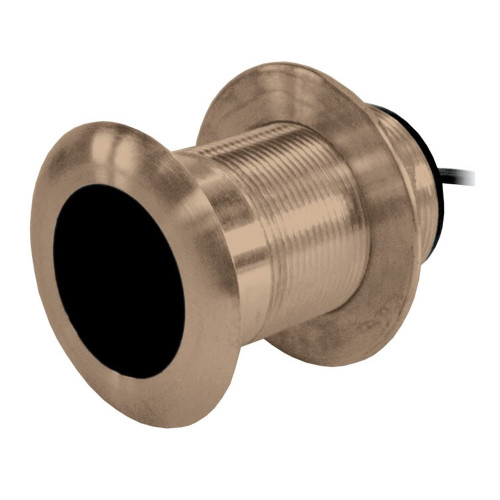
Garmin B117 Bronze Thru-Hull Depth/Temp Transducer, 8-Pin, 600W, 50-200 kHz
Out of stock

Raymarine B258 Thru-Hull Transducer, Bronze, 1kW, 50/200 kHz, Fairing Block
Out of stock
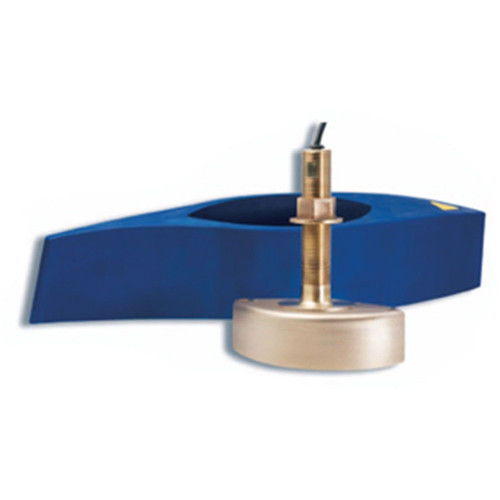
Simrad B258 Bronze Thru-Hull Depth/Temp Transducer, For BSM-1 Echosounder, 1kW, 50/200 kHz, 9-Pin, 500 m Max Depth
Out of stock

Garmin B164-12 Bronze Thru-Hull Transducer, 12° Tilt, 1kW, 50/200 kHz, Depth/Temp, 6-Pin Connector
Out of stock