


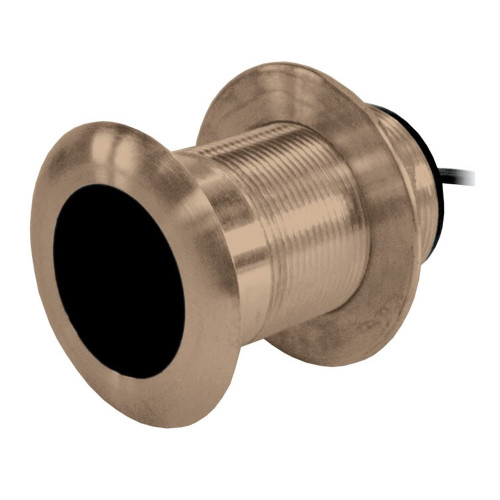
Garmin Airmar B619 Bronze Thru-Hull Transducer, 8-Pin, 500 W, 77/200 kHz, Depth/Temperature, 900 ft Max Depth, 30 ft Cable


-
Perfect Fit, Guaranteed
Get the right part every time
-
Expert Support
Our in-house specialists know our products inside and out
-
Enhanced Value & Service
We go beyond the sale with professional and balanced services
-
Wordwide Delivery
Enjoy hassle-free worldwide delivery
Garmin Airmar B619 Bronze Thru-Hull Transducer, 8-Pin, 500 W, 77/200 kHz, Depth/Temperature, 900 ft Max Depth, 30 ft Cable

Garmin Airmar B619 Bronze Thru-Hull Transducer, 8-Pin, 500 W, 77/200 kHz, Depth/Temperature, 900 ft Max Depth, 30 ft Cable
Overview
The Garmin B619 is a bronze thru-hull transducer with a tilted element that keeps the sonar beam aimed down through hull deadrise, so depth readings stay consistent when the boat is on plane. It connects via an 8-pin plug and outputs standard dual-frequency sonar at 77/200 kHz with 500 W power, with depth readings rated up to 900 ft and a built-in water temperature sensor.
The housing sits nearly flush, with about 5 mm of the body outside the hull to keep drag down. It uses a right-angle cable exit to save headroom inside the bilge area and reduce the chance of the cable getting stepped on, and the attached cable is 30 ft long.
This transducer is a solid match for fiberglass and wood hulls where you want a permanent, clean thru-hull install for cruising, fishing, and everyday navigation depth tracking. Bronze thru-hulls are not a fit for metal hulls due to corrosion risk.
Key features
- Standard dual-frequency sonar: 77/200 kHz, 500 W, rated for depths up to 900 ft
- Depth and water temperature output (no speed sensor)
- 8-pin transducer connector for Garmin sonar ports that accept 8-pin plugs
- Tilted element options that match common deadrise ranges, helping keep the beam pointed toward the bottom
- Low-profile bronze thru-hull body with about 5 mm outside-hull protrusion to reduce drag
- Right-angle cable exit for low headroom installations and better protection in busy bilge spaces
- 30 ft cable length for routing to the helm or electronics box without splices in many installs
- ABYC H-27 compliant housing
Variants
This product is offered in two tilt configurations. The tilt angle is selected to match the hull deadrise at the mounting location, so the sonar beam runs closer to vertical once the transducer is installed.
Both versions share the same bronze thru-hull format, 8-pin connection, 30 ft cable, and depth plus water temperature sensing.
- 010-10217-22: Tilt 20° (for 16° to 24° hull deadrise). This tilt is intended for steeper deadrise sections where a straight, non-tilted element would aim the beam off-angle.
- 010-10217-21: Tilt 12° (for 8° to 15° hull deadrise). This tilt fits moderate deadrise hulls and helps keep bottom tracking stable as speed increases.
Compatibility and fit
Because the tilt is built into the element, the key fit check is the deadrise where you plan to drill, not the overall hull shape. Measure deadrise at the install spot with an angle finder or digital level, then match it to the 12° or 20° option.
Bronze thru-hull housings are commonly used on fiberglass and wood hulls. They should not be installed in metal hulls due to electrolytic corrosion risk.
Installation and setup
This is a below-the-waterline thru-hull install that typically uses a 2 in (51 mm) hole through the hull. Plan the location so the transducer face stays in clean water flow and remains continuously submerged, away from intakes, strakes, steps, and other turbulence sources.
During installation, align the arrow on top of the housing toward the keel or centerline so the tilt works as intended. A rubber washer is supplied to help the hull nut seat properly on hull surfaces that are not perfectly flat, and proper marine sealant is required to bed and seal the fitting. After launch, check for leaks promptly.
Sonar and system integration
The B619 uses an 8-pin connector and is intended for Garmin sonar devices that accept an 8-pin transducer plug. If your sounder uses a different transducer port style, an adapter cable may be required.
This is standard dual-frequency sonar rather than CHIRP or scanning imaging, so it pairs best with setups that need dependable depth and temperature on a permanent thru-hull mount.
Maintenance and care
Keep the face clean for reliable readings, especially in warm or high-growth water. If you apply antifouling, use a water-based coating that is safe for transducers and avoid harsh solvents on the acoustic window and seals.
Periodically inspect the cable routing, strain relief, and the inside-hull nut area for any signs of movement or seepage, especially after the first few trips and after heavy pounding.
Safety notice
WARNING: This product can expose you to chemicals which are known to the State of California to cause cancer, birth defects or other reproductive harm. For more information go to P65Warnings.ca.gov.
We ship all in-store (FL) stock orders the same day if placed before 3 PM EST, Monday through Friday. Orders placed after this time will ship the next business day. Orders fulfilled from other warehouses or manufacturers may not ship the same day. If an item is out of stock, we will notify you promptly.
Related Products

Garmin Airmar P19 Plastic Thru-Hull Transducer, 8-Pin, 77/200 kHz, 300 W, 900 ft Max Depth, Depth and Temperature, 30 ft Cable

Garmin Airmar B117 Bronze Thru-Hull Transducer, 50/200 kHz, 600W, Depth/Temp, 6-Pin
Out of stock

Garmin Intelliducer NMEA 2000 Thru-Hull Depth/Temp Transducer, 0-12° Deadrise, 150W, 160 kHz, 900 ft Max Depth
Out of stock

Garmin B258 Bronze Thru-Hull Depth/Temp Transducer, 1kW, 50/200 kHz, 8-Pin
Out of stock
Garmin B117 Bronze Thru-Hull Depth/Temp Transducer, 8-Pin, 600W, 50-200 kHz
Out of stock