


Simrad NSS evo3S Chartplotter/Fishfinder MFD, C-MAP US Enhanced Charts, 1kW CHIRP Sonar, NMEA 2000


-
Perfect Fit, Guaranteed
Get the right part every time
-
Expert Support
Our in-house specialists know our products inside and out
-
Enhanced Value & Service
We go beyond the sale with professional and balanced services
-
Wordwide Delivery
Enjoy hassle-free worldwide delivery
Simrad NSS evo3S Chartplotter/Fishfinder MFD, C-MAP US Enhanced Charts, 1kW CHIRP Sonar, NMEA 2000

Simrad NSS evo3S Chartplotter/Fishfinder MFD, C-MAP US Enhanced Charts, 1kW CHIRP Sonar, NMEA 2000
Overview
The Simrad NSS evo3S is a networked chartplotter and fishfinder combo offered with 9 inch, 12 inch, and 16 inch SolarMAX IPS displays, with radar-bundle options that add a HALO20+ dome. It is built for a modern helm where you want charts, sonar, and radar on one screen, with control that still works when conditions get wet or bumpy.
On the fishfinding side it supports a built-in 1 kW CHIRP echosounder and dual sonar connections (CH1 and CH2) so you can keep more than one sonar source plugged in. On the navigation and system side, it is meant to sit on your boat network, tying in radar over Ethernet and sharing data over NMEA 2000 for engines, AIS, autopilot, and other onboard systems.
Key features
- Screen size choices across the range: 9 inch, 12 inch, or 16 inch display options to match helm space and viewing distance
- SolarMAX IPS display technology with optical bonding to help keep the screen clear in bright sun and reduce internal fogging
- Hybrid control with touchscreen plus keypad and rotary dial for confident operation with wet hands or in rough water
- Built-in 1 kW CHIRP sonar support, with CH1 and CH2 sonar ports for connecting multiple transducers
- Supports advanced sonar views such as Active Imaging, ForwardScan, and StructureScan 3D when paired with compatible transducers and modules
- Two Ethernet ports for radar integration, sonar expansion modules, and multi-display networking
- NMEA 2000 networking for sharing position, heading, engine data, autopilot control, and other vessel information
- Wireless connectivity for mobile mirroring and easier updates when connected to a compatible device or hotspot
- Radar-bundle variants include a HALO20+ radar for close-in awareness and longer-range targets without changing the core MFD workflow
Variants
This product is offered in multiple configurations to match different helms and electronics packages.
Across the range, the options vary by screen size and whether a HALO20+ radar is included. The core chartplotter and sonar functionality remains centered on the same NSS evo3S combo platform.
- 000-15555-002: 12 inch screen size with HALO20+ radar. This configuration suits a single-display helm that wants radar coverage without adding a separate radar package later.
- 000-15403-002: 12 inch screen size with no radar included. This is a clean way to build around a 12 inch display and add radar or other Ethernet accessories as the system grows.
- 000-15402-001: 9 inch screen size with no radar included. This option fits tighter consoles where you still want a full-featured combo unit and network expansion.
- 000-15554-001: 9 inch screen size with HALO20+ radar. This is a compact bundle that keeps radar capability on smaller center consoles and space-limited helms.
- 000-15404-001: 16 inch screen size with no radar included. This configuration is aimed at larger helms where a big display matters for split-screen chart, sonar, and data views.
Installation and setup
Plan the mounting style early. Bracket mounting works well on open center consoles and smaller dashboards, while flush mounting is the usual choice for a clean glass-helm look. Leave room behind the unit for cable bends and strain relief, and keep network and sonar cables routed away from high-current runs where possible.
Sonar performance depends on the transducer and installation. If you are relying on CHIRP for bottom tracking at speed or in rough water, pay attention to transducer type, mounting location, and clean water flow across the face of the transducer.
Electrical and system integration
This unit is typically wired as part of a NMEA 2000 backbone for vessel data and control, and it uses Ethernet for higher-bandwidth accessories such as radar and sonar expansion. If you are running multiple displays, an Ethernet network helps with sharing radar, sonar sources, and mapping data between stations.
When integrating with engines, autopilot, or switching, confirm that your existing network is healthy with proper termination and power separation so the display is not trying to power the backbone through an accessory feed.
Use cases on board
This series makes sense for skippers who want one helm display to handle day-to-day navigation plus fishing sonar, while still leaving room to grow into radar, autopilot, and other networked systems. It works equally well on coastal cruisers that want clearer chart and radar views at the helm and on anglers who want CHIRP sonar and advanced imaging options on a network-ready platform.
We ship all in-store (FL) stock orders the same day if placed before 3 PM EST, Monday through Friday. Orders placed after this time will ship the next business day. Orders fulfilled from other warehouses or manufacturers may not ship the same day. If an item is out of stock, we will notify you promptly.
Related Products

Simrad NSS7 evo3 Chartplotter/Fishfinder, C-MAP US Enhanced Charts, Touchscreen, NMEA 2000, Wi-Fi
Out of stock


Simrad NSS evo3 Chartplotter/Fishfinder MFD, C-MAP US Enhanced Charts, 10 Hz GPS/GLONASS, NMEA 2000, Touchscreen and Keypad with Rotary Dial, Built-In Wi-Fi, HDMI Out, 10-31.2V, IPX6/7


Simrad GO Fishfinder/Chartplotter Combo, C-MAP DISCOVER Charts, Touchscreen, GPS, NMEA 2000, Wi-Fi
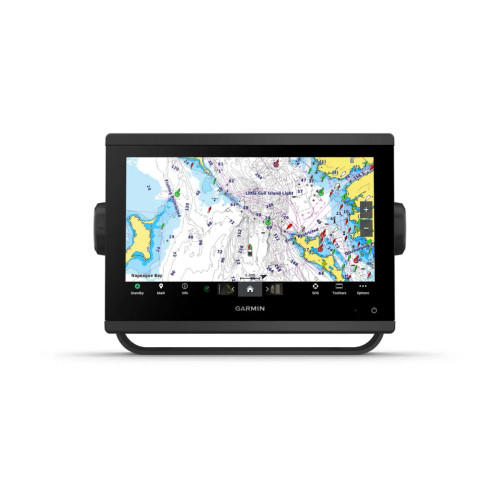

Garmin GPSMAP 923xsv Chartplotter Sonar Combo, 9in IPS Touchscreen, SideVü, ClearVü, 1kW CHIRP, NMEA 2000
Out of stock
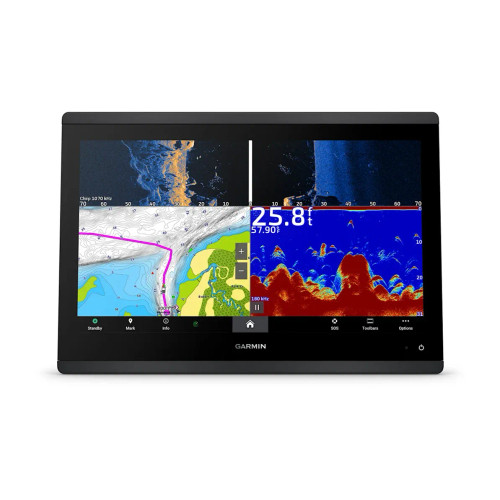

Garmin GPSMAP 1643xsv Chartplotter/Fishfinder, 16 in IPS Touchscreen, Garmin Navionics+ Built-In Charts, Ultra High-Definition SideVü/ClearVü Sonar, 1 kW CHIRP Support, NMEA 2000, Wi-Fi