


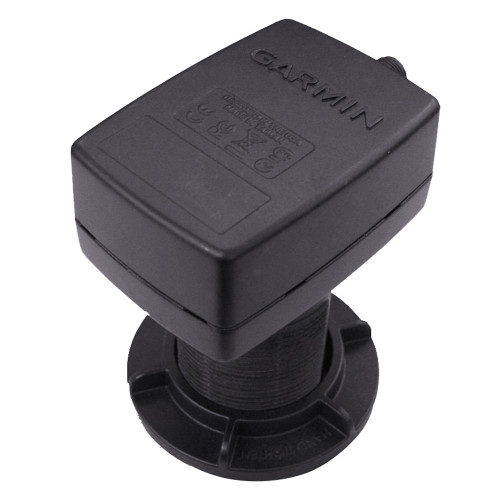
Garmin Intelliducer NMEA 2000 Thru-Hull Depth/Temp Transducer, 13-24 Degree Deadrise, 150W RMS, 900 ft Max Depth

-
Perfect Fit, Guaranteed
Get the right part every time
-
Expert Support
Our in-house specialists know our products inside and out
-
Enhanced Value & Service
We go beyond the sale with professional and balanced services
-
Wordwide Delivery
Enjoy hassle-free worldwide delivery
Garmin Intelliducer NMEA 2000 Thru-Hull Depth/Temp Transducer, 13-24 Degree Deadrise, 150W RMS, 900 ft Max Depth

Garmin Intelliducer NMEA 2000 Thru-Hull Depth/Temp Transducer, 13-24 Degree Deadrise, 150W RMS, 900 ft Max Depth
Overview
The Garmin 010-00701-01 is a thru-hull Intelliducer that reports water depth and water temperature over an NMEA 2000 network for display on a compatible helm screen or instrument.
This version is matched to hulls with a 13-24° deadrise so the sensor face sits correctly once installed. Sonar operates at 160 kHz with 150 W (RMS) output and supports depth readings to 900 ft (275 m) depending on water and bottom conditions.
It draws power from the NMEA 2000 backbone (9-16 Vdc), uses LEN 4, and includes a 19 ft 8 in (6 m) NMEA 2000 drop cable. Overall size is 4 19/32 in (116.3 mm) long x 4 in (101.4 mm) wide x 3 in (76.2 mm) deep.
Key features
- Thru-hull mount for boats with a 13-24° deadrise, keeping the sensing element properly oriented in the water
- Sends depth and temperature data directly on NMEA 2000, using standard network power (9-16 Vdc) and LEN 4
- 160 kHz depth sounder with 150 W (RMS) output and depth capability up to 900 ft (275 m) in suitable conditions
- Includes a 19 ft 8 in (6 m) NMEA 2000 drop cable for routing from the backbone to the sensor location
- Compact footprint for typical bilge and under-sole installations, with a housing size of 4 19/32 in x 4 in x 3 in
What’s included
- Thru-hull Intelliducer (top and bottom sections)
- Gasket and locking ring
- NMEA 2000 drop cable
- NMEA 2000 T-connector
Compatibility and fit
This sensor is intended for fiberglass and metal hulls. It is not intended for wood hull installations, where swelling can damage the fitting. Deadrise match matters on a thru-hull installation, so confirm your hull angle at the mounting location falls in the 13-24° range before drilling.
On the network side, it connects as an NMEA 2000 device and transmits water depth and temperature (including PGNs 128267 and 130312). It suits installations where you want numeric depth and temperature data on your display rather than fish targets or bottom contour imagery.
Installation and setup
Plan the mounting spot with the same care as any thru-hull: pick a location with clean water flow, keep it away from intakes and discharges, and avoid areas with turbulence from shafts or propellers. A position close to the keel is commonly used, as long as there is safe access inside the hull for tightening and future service.
Install with an appropriate marine sealant and align the body so the keel indicator points toward the keel. After launch, check for leaks immediately and continue to inspect the installation during the first day in the water.
Maintenance and care
Keep the submerged surface clean so growth does not interfere with readings. A mild detergent and a lightly used scour pad are suitable for routine cleaning, and avoiding scratches helps the sensor stay accurate.
In saltwater, coating the submerged surface with a water-based antifouling paint helps reduce fouling. Recoat as part of seasonal maintenance.
Use cases on board
This setup makes sense for coastal cruisers, fishing boats, and sailboats that want depth and temperature shown at the helm over NMEA 2000 without adding a full fishfinder-style transducer. It also works well on boats where the thru-hull location is fixed by construction and you need the 13-24° deadrise match at that spot.
We ship all in-store (FL) stock orders the same day if placed before 3 PM EST, Monday through Friday. Orders placed after this time will ship the next business day. Orders fulfilled from other warehouses or manufacturers may not ship the same day. If an item is out of stock, we will notify you promptly.
Related Products

Garmin Intelliducer NMEA 2000 Thru-Hull Depth/Temp Transducer, 0-12° Deadrise, 150W, 160 kHz, 900 ft Max Depth
Out of stock

Garmin Intelliducer TM Transom-Mount Depth/Temp Transducer, NMEA 2000, 150W, 160 kHz, 900 ft Max Depth
Out of stock

Garmin P79 In-Hull Depth Transducer, NMEA 2000, 235 kHz, 500 ft Depth, 0-22° Deadrise

Garmin B265LM Bronze Thru-Hull CHIRP Transducer, For GSD 26 CHIRP Sonar Module, 1 kW, Depth/Temperature, 42-65 and 85-135 kHz, 3,000 ft Max Depth, 39 ft Cable, 0-20 Degree Deadrise, Bare Wire

Garmin P319 Depth/Temp Thru-Hull Transducer, 50/200 kHz, 600W, 6-Pin, 0-7 Deg Deadrise
Out of stock