


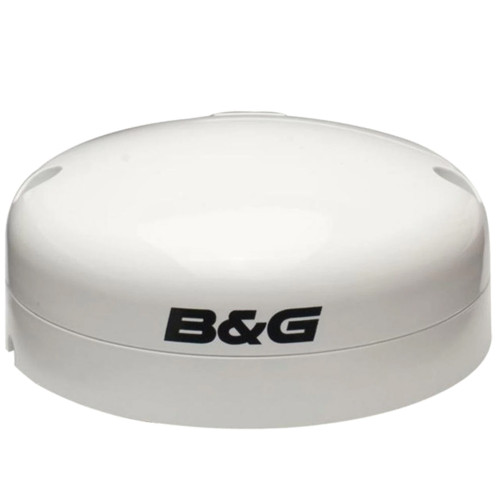
B&G ZG100 GPS Antenna, 10 Hz, NMEA 2000, Heading Sensor, IPX7, Heel & Trim Sensors

-
Perfect Fit, Guaranteed
Get the right part every time
-
Expert Support
Our in-house specialists know our products inside and out
-
Enhanced Value & Service
We go beyond the sale with professional and balanced services
-
Wordwide Delivery
Enjoy hassle-free worldwide delivery
B&G ZG100 GPS Antenna, 10 Hz, NMEA 2000, Heading Sensor, IPX7, Heel & Trim Sensors

B&G ZG100 GPS Antenna, 10 Hz, NMEA 2000, Heading Sensor, IPX7, Heel & Trim Sensors
Overview
The B&G 000-11048-002 is a ZG100 GPS antenna that connects to a NMEA 2000 network and outputs position plus magnetic heading.
It updates position up to 10 Hz, runs from 9 to 18 V DC supplied by the NMEA 2000 backbone, and connects using a NMEA 2000 Micro-C port. The housing is rated IPX7 and measures about 90 mm in diameter by 38 mm high, which fits common deck, coachroof, arch, and mast installations.
Along with GPS position data, it can share heading plus heel and trim information across the network for functions like head-up chart orientation, radar overlay, and sailing performance displays on compatible systems.
Key features
- Position updates up to 10 Hz for smoother tracking while turning and accelerating
- Outputs magnetic heading on NMEA 2000 for chart stabilization and radar overlay on compatible displays
- GPS and Galileo support with augmentation (WAAS, EGNOS, MSAS) and QZSS readiness
- NMEA 2000 Micro-C network connection with a 2 LEN load on the backbone
- IPX7 waterproof rating for exposed mounting locations
- Compact size (90 mm diameter, 38 mm height) with a 0.5 m compass-safe distance guideline
Compatibility and network integration
The ZG100 outputs data on NMEA 2000 only and is powered from the NMEA 2000 backbone. It can be selected as the GPS and heading source from compatible network displays, and it does not output NMEA 0183 sentences.
Heading from a GPS/compass sensor is commonly used for chart display stabilization and radar overlay. If your system requires a rate compass for advanced radar tracking or autopilot functions, match those requirements before relying on this sensor for those features.
Installation and setup
Install it where it has a clear view of the sky and connect it to the NMEA 2000 backbone with a T-connector, with the backbone properly terminated. It supports surface mounting and standard pole mounting on a 1 inch, 14 TPI mount. After mounting, run a heading calibration from a compatible display and complete the on-water calibration routine so the compass can account for local magnetic influences.
Placement and interference notes
GPS and compass sensors are sensitive to interference. Keep it away from VHF antennas, radar scanners, radio transmitters, speakers, magnets, and high-current cabling, and maintain at least 0.5 m (20 in) from a magnetic compass. When space allows, extra separation improves heading stability and reduces dropouts when electronics are transmitting.
Use cases on board
This is a good match for boats where the chartplotter is mounted under a hardtop or inside the cabin and needs a GPS source placed outside for a better sky view. It also fits NMEA 2000 sailing systems that want heading plus heel and trim data available to instruments and performance pages without adding separate sensors.
What's included
- N2K-T-RD network T-connector
- NMEA 2000 6 ft network extension cable
Maintenance and care
Rinse the housing with fresh water after saltwater use and check the cable connection for strain and a snug collar. If you remove and reinstall the sensor or change its location, rerun heading calibration to account for the new magnetic environment.
We ship all in-store (FL) stock orders the same day if placed before 3 PM EST, Monday through Friday. Orders placed after this time will ship the next business day. Orders fulfilled from other warehouses or manufacturers may not ship the same day. If an item is out of stock, we will notify you promptly.
Related Products

Garmin GPS 24xd NMEA 2000 GPS Sensor, Remanufactured, Magnetic Heading Sensor, Multi-Band GNSS, 10 Hz, IPX7
Out of stock


Garmin GPS 24xd GPS Antenna with Heading Sensor, Multi-Band GNSS, 10 Hz, IPX7


Garmin SteadyCast Heading Sensor, NMEA 2000, 9-32 VDC, IPX7, 10 Hz, +/-3° Accuracy
Out of stock

B&G WS310 Wired Interface, For WS310 Wind Sensor, NMEA 2000, IPX7
Out of stock

Garmin GPS 19x HVS GPS Receiver/Antenna, NMEA 0183, 10 Hz, IPX7
Out of stock