


Garmin GMR High-Definition Marine Radar




-
Perfect Fit, Guaranteed
Get the right part every time
-
Expert Support
Our in-house specialists know our products inside and out
-
Enhanced Value & Service
We go beyond the sale with professional and balanced services
-
Wordwide Delivery
Enjoy hassle-free worldwide delivery

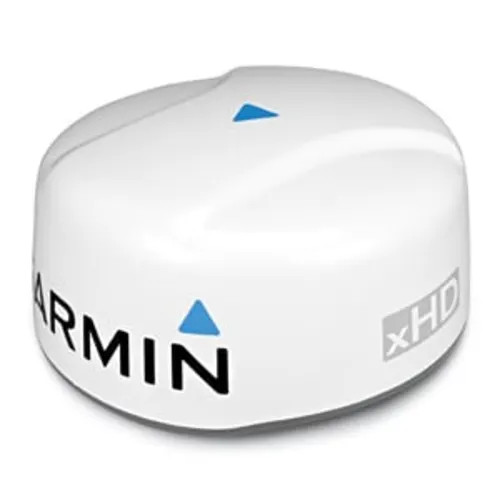
Garmin GMR High-Definition Marine Radar
Overview
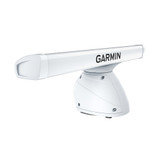
The Garmin GMR radar is a network radar lineup that includes open-array and radome scanners for Garmin chartplotters. Open-array xHD2 options run on 10 to 32 Vdc and carry an IPX6 water rating for exposure to heavy seas, while the radome options package the scanner in an 18 inch or 24 inch dome.
On the xHD2 open-array models, the antenna rotation speed is 24 rpm or 48 rpm, and beamwidth depends on antenna length: 1.8 degrees on 4 ft arrays and 1.1 degrees on 6 ft arrays. The GMR 18 xHD and GMR 24 xHD radome models use 4 kW transmit power with a 48 nautical mile max range setting.
All radar functions are controlled from a compatible Garmin chartplotter over the Garmin Marine Network, so the important fit checks are scanner type, mounting space, cable routing, and matching the radar to your boat’s power system and helm electronics.
Key features
- Open-array configurations with 4 ft or 6 ft antennas and 4 kW, 12 kW, or 25 kW output power (depending on model).
- Radome configurations in 18 inch or 24 inch domes with 4 kW transmit power and a 48 nautical mile max range setting.
- xHD2 open-array models: 10 to 32 Vdc input voltage and IPX6 water rating (IEC 60529) for heavy-seas exposure.
- xHD2 open-array models: antenna rotation speed of 24 rpm or 48 rpm for faster screen refresh when needed.
- xHD2 open-array beamwidth by antenna length: 1.8 degrees (4 ft) or 1.1 degrees (6 ft).
- xHD2 open-array specified cable lengths: 15 m power cable and 15 m Garmin Marine Network cable.
- Connects through the Garmin Marine Network to share radar data across compatible networked displays.
- Garmin Marine Network cables are required; third-party CAT5 cable and RJ45 connectors are not used for Garmin Marine Network connections.
- Bird Mode gain support is available on these radar families when paired with compatible Garmin chartplotters.
Variants
This listing covers multiple Garmin GMR radar configurations. The main differences across the range are scanner style (open array or radome), physical size (4 ft or 6 ft array, or 18 inch or 24 inch dome), and transmitter power (4 kW, 12 kW, or 25 kW on open-array models; 4 kW on the domes).
On the xHD2 open-array options, antenna length changes beamwidth (1.8 degrees on 4 ft, 1.1 degrees on 6 ft) and the pedestal supports 24 rpm or 48 rpm rotation. The radome units keep the scanner enclosed in a dome and use a 48 nautical mile max range setting with 24 rpm or 48 rpm rotation.
Compatibility and system integration
These radars are meant to be operated from a compatible Garmin chartplotter, with radar data shared over the Garmin Marine Network. If your boat has more than one radar installed, configuration is handled from the radar screen for the specific unit you want to adjust.
Plan the network path the same way you would plan any critical helm wiring: avoid parallel runs alongside high-power or RF lines when possible, use proper chafe protection through bulkheads, and keep connections accessible for service. Chartplotter software should be up to date before first power-up so the radar is recognized cleanly during setup.
Installation and setup
Mount the scanner where the beam has the clearest view and where people are kept out of the beam path. On the xHD2 open-array models, the beam spreads vertically 11.5 degrees above and 11.5 degrees below the radiating element, so mounting height and fore-aft pitch matter on boats that run bow-up.
For xHD2 open-array installations, grounding is made to a water ground location rather than the battery negative terminal. Any cable pass-through should be sealed after routing to keep spray and washdown water out of the structure, and the install should respect compass-safe distance (90 cm for a standard compass) and separation guidance around other electronics and transmitters.
Use on board
A GMR radar setup is a practical match for skippers who regularly run in reduced visibility, make early-morning departures, or want an extra layer of situational awareness around traffic and weather. Anglers also lean on radar features like Bird Mode when working offshore bait activity.
We ship all in-store (FL) stock orders the same day if placed before 3 PM EST, Monday through Friday. Orders placed after this time will ship the next business day. Orders fulfilled from other warehouses or manufacturers may not ship the same day. If an item is out of stock, we will notify you promptly.
Related Products


Garmin GMR Fantom Marine Radar, For Garmin Chartplotters, Garmin BlueNet and Marine Network, Solid-State, MotionScope, 10-32V


Garmin GPSMAP 1042xsv w/GMR 18HD+ Radar
Out of stock
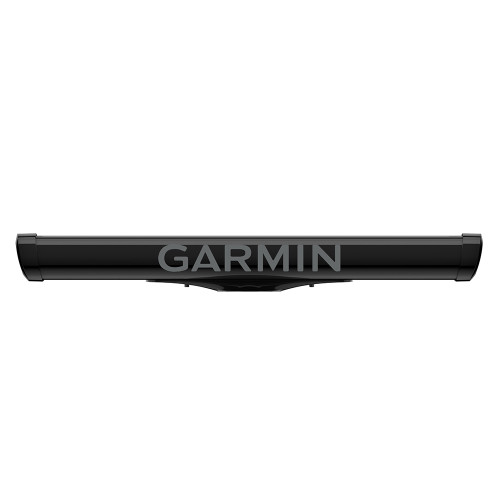
Garmin GMR Fantom Radar Antenna Array, Black, No Pedestal
Out of stock
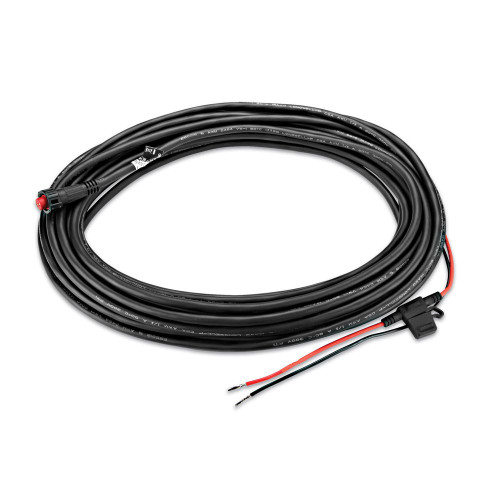
Garmin GMR Radar Power Cable, 48 ft, Threaded Connector

Garmin GMR xHD3 Open-Array Radar & Pedestal, IPX6, Scan Averaging