


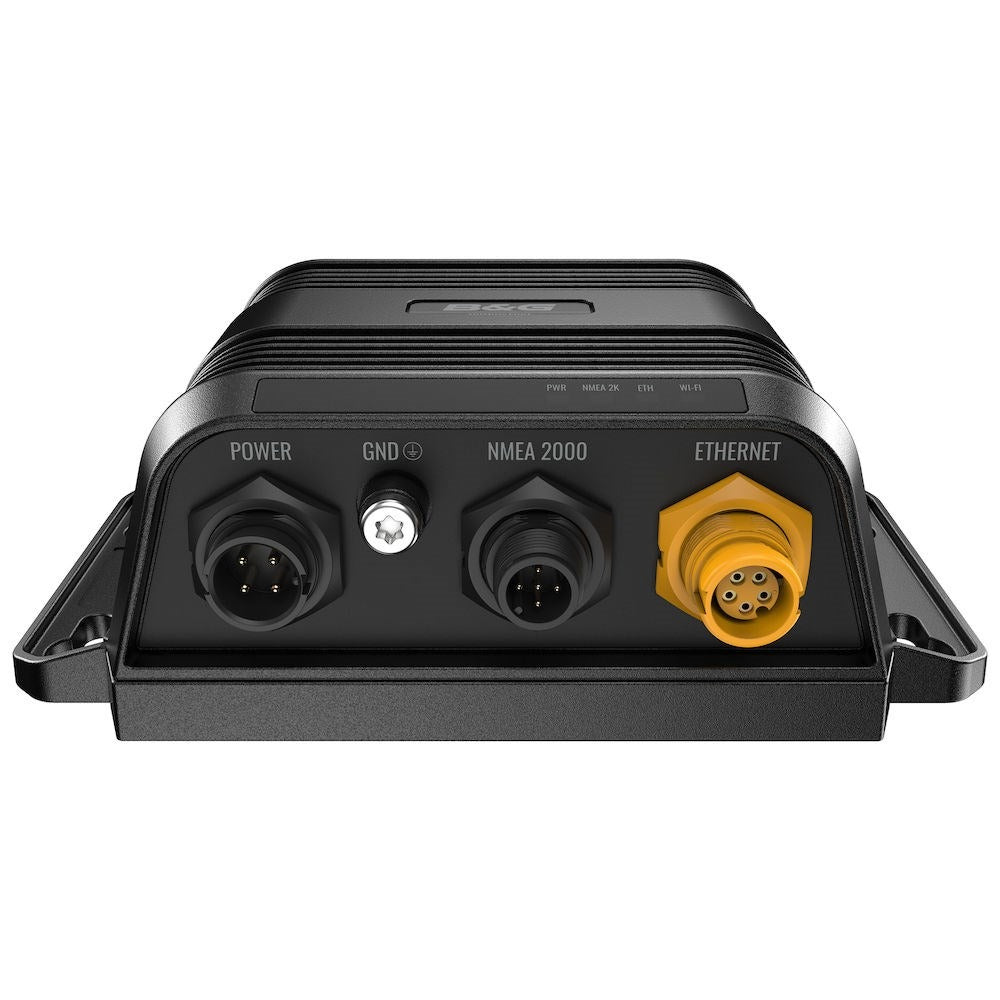
B&G Triton Edge Sailing Processor, For Triton/Nemesis Displays
B&G Triton Edge Sailing Processor, For Triton/Nemesis Displays is backordered and will ship as soon as it is back in stock.

B&G Triton Edge Sailing Processor, For Triton/Nemesis Displays is backordered and will ship as soon as it is back in stock.
Description
Description
Overview
The B&G 000-15134-001 is a Triton Edge sailing processor that sits on your boat’s network and turns sensor inputs into the sailing data you actually steer and trim by on compatible B&G displays and chartplotters. It powers from 12/24 V DC systems (9.0–31.2 V DC) and draws up to 4 W, so it fits cleanly into typical nav electronics power distribution.
On board, it adds start line functions, true wind refinement, and correction tools for boat speed and wind that take heel and trim into account, helping keep targets and steering guidance more consistent as conditions change. The housing is rated IPX6 and IPX7 and is compact enough to mount near your nav hub while still keeping good access to cabling.
Key features
- Works on 12/24 V DC power systems (9.0–31.2 V DC), with a 1 A recommended fuse and up to 4 W maximum power consumption.
- NMEA 2000 connectivity via Micro-C for sharing calculated sailing data with connected instruments and sensors.
- Ethernet port (100BASE-T, 5-pin Ethernet connector) for network integration and access to the web interface.
- Built-in Wi-Fi (802.11 b/g/n) for onboard connectivity, including hotspot access for setup.
- Start line calculations plus boat speed and wind correction tools, including heel and trim compensation.
- Records sailing data at a 1-second sampling rate, with export options in .gpx or .csv for post-sail review.
- IPX6 and IPX7 waterproof rating and an operating temperature range of -15°C to 55°C (5°F to 131°F).
Compatibility and fit
This processor is intended for B&G systems where you want the sailing calculations available on Triton and Nemesis displays as well as Vulcan and Zeus chartplotters. It is most at home on boats already using NMEA 2000 sensors for wind, speed, heading, and related inputs, since the processor relies on network data quality for the best results.
Installation and setup
Mount the unit vertically with the cable exits facing down, and leave at least 15 cm (5.9 in) of clearance below the connectors so the cables can be installed and serviced without strain. Keep it at least 50 cm (20 in) from any magnetic compass, and avoid engine compartments where heat and electrical noise can make instrument systems harder to keep clean and stable.
The housing includes an earth-ground connection point intended to help bleed off static charge and protect the NMEA 2000 network, which is especially relevant when using wired masthead wind sensors. Power is supplied through the included power lead, while the NMEA 2000 drop and tee provide the network connection, and Ethernet can be used for linking into a larger nav network and for setup access.
Use on board
Triton Edge makes the most sense for sailors who want start line tools and refined wind and boat speed correction for racing, club racing, or performance-minded cruising, without changing out the rest of the network. It is also a practical fit for boats where you want to record and review sessions later, using the processor’s built-in data recording and export options.
What’s included
- Triton Edge sailing processor
- Mounting screws
- Power cable
- NMEA 2000 cable (0.6 m / 2 ft)
- NMEA 2000 tee connector
- Connection details card
Specifications
Specifications
-
DisplayNo
-
PowerYes
-
Product ColorBlack
-
Product MaterialABS Plastic
-
Product TypeProcessor
Reviews (0)
Reviews (0)
Shipping and delivery
Shipping and delivery
Orders are processed within 2 business days, which includes verification, packing, and dispatch. Orders of $100 or more qualify for free shipping when eligible. For orders under $100, shipping costs are calculated at checkout based on destination, package weight, and selected service. International shipping is available for eligible products, and certain items may require additional handling, warehouse transfers, or may ship directly from the manufacturer, which can affect processing time.
Deliveries are handled by preferred carriers such as USPS, UPS, FedEx, DHL, and others depending on your location and selected service. Estimated delivery times are displayed at checkout and may vary due to customs processing, carrier delays, weather, postal disruptions, or other circumstances beyond our control. Once your order ships, you'll receive a confirmation email with tracking information. Tracking may take up to 24 hours to update on the carrier's website and is also available through your account when applicable.
We ship throughout the United States and to most international destinations for products eligible for international shipping. International orders may be subject to customs duties, taxes, brokerage charges, or other import fees, which are the customer's responsibility and are not included in the product or shipping price. PO Boxes are accepted only when shipping through USPS, and not all packages qualify for this option. If your order does not arrive within the estimated delivery window, please contact us at info@apollolighting.com or +1 (954) 375-0100 so we can assist with locating your package.
Learn more.
Returns and refunds
Returns and refunds
Returns may be requested within 30 days of receiving your order. Items must be unused, uninstalled, unaltered, and returned in their original packaging with all tags, packing materials, blank warranty cards, manuals, instructions, accessories, and included items. Certain products, including installed or used electronics, electrical components, lighting, consumables, custom or special-order items, cut-to-length products, safety equipment, and merchandise exposed to water or marine conditions, may not be eligible for return.
To request a return, sign in to your account and select the applicable order and items, and submit your request for review. Eligible unfulfilled items may also be submitted for cancellation within 1 hour of placing the order. Returns or cancellations are not considered approved until you receive confirmation from Apollo Lighting. Please do not ship or drop off merchandise before receiving return approval and instructions.
Customers are responsible for arranging and paying for return shipping unless the return is due to an error by Apollo Lighting or the item is verified as defective, damaged, or incorrect. Missing, damaged, defective, or incorrect items must be reported within 2 business days of delivery, and photos or other documentation may be required for review. If the issue is verified, Apollo Lighting may provide or reimburse return shipping and issue a replacement or refund depending on the circumstances. International customers are responsible for return shipping, duties, taxes, customs charges, brokerage fees, and other costs associated with an international return.
After your return is received and inspected, approved refunds are issued to the original payment method and may take 5-7 business days to appear after processing. Original shipping and handling charges are nonrefundable, and the value of any included free items that are not returned may be deducted from the refund. Apollo Lighting does not charge a standard restocking fee on eligible returns. Returns that are incomplete, damaged, installed, used, altered, improperly packaged, or otherwise do not meet the eligibility requirements may be refused. We recommend using a trackable and appropriately insured shipping service for all customer-arranged returns.
For assistance, contact info@apollolighting.com or call +1 (954) 375-0100.
Learn more.
Product warranty
Product warranty
Many products sold by Apollo Lighting include a manufacturer's warranty covering defects in materials or workmanship. Warranty terms vary by brand, product category, and model, so eligibility, coverage duration, exclusions, and available remedies are determined by the applicable manufacturer. We recommend reviewing the warranty information provided with your product before installation or use, especially for marine electronics, navigation equipment, lighting, electrical systems, pumps, safety equipment, and other specialized marine products.
If you need warranty service, the claim must follow the process established by the manufacturer, authorized service center, or designated warranty provider. You may be asked for proof of purchase, a serial number, product registration, photos, maintenance or installation records, or other documentation. Apollo Lighting does not determine or modify a manufacturer's warranty coverage or final claim decision, but we are happy to help provide purchase information and direct you to the appropriate manufacturer or warranty resource.
Keep your receipt, product documentation, serial number information, and original packaging when practical. Damage caused by normal wear, misuse, improper installation, insufficient maintenance, corrosion, impact, unauthorized modifications, electrical issues, or operation outside the manufacturer's specifications may not be covered. Warranty claims are separate from standard returns, so a product that has been installed, used, or exposed to marine conditions may no longer qualify for return while still remaining eligible for evaluation under the manufacturer's applicable warranty.
Learn more.